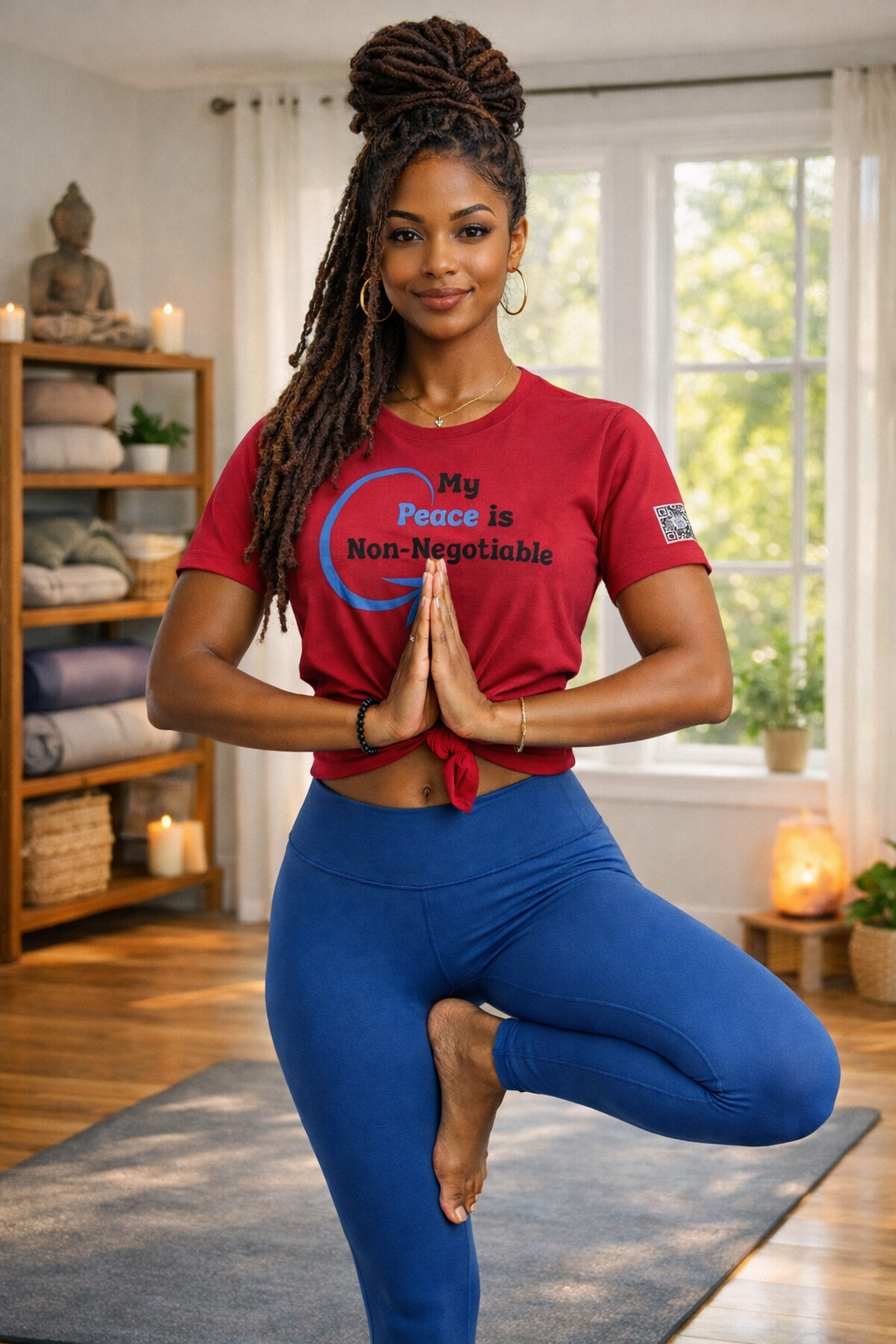
A Woman Practicing Yoga While Wearing the My Peace Red Ladies Graphic Tee - Affirmation Apparel by Sawubona Life
What Mindful Apparel Actually Means (And Why It's Not Just a Label)
Sawubona. In the isiZulu tradition, this greeting means "I see you," acknowledging your full worth, your lived experience, and your presence. It's the spirit behind how mindful apparel supports mental health: clothing chosen with intention, not impulse.
Mindful apparel is clothing selected with deliberate attention to how it feels on your body, what it represents, and how it supports your daily wellbeing. It combines sensory comfort with personal meaning.
This guide from Sawubona Life breaks down the psychology, the fabric science, and the practical steps for building a wardrobe that works with your nervous system instead of against it. The brands getting this right treat comfort and meaning as one decision, not two.
The Science of Touch: How Fabric Affects Your Nervous System
Touch is the first sense humans develop, and skin remains the largest sensory organ. Clothing sits against that skin all day, which means fabric choice is a continuous sensory input your nervous system processes whether you notice it or not.
Rough seams, scratchy tags, and heavy fabrics register as low-grade irritation. For someone with sensory processing differences, that irritation compounds. The National Institute of Mental Health overview of sensory processing explains how sensory input interacts with anxiety and stress responses.
Soft, smooth, tagless fabric reduces that background noise. When your skin isn't sending "irritation" signals all day, your nervous system has more capacity for everything else.
Sensory-Friendly Clothing for Anxiety: Features That Calm Instead of Trigger
Sensory-friendly clothing for anxiety is apparel designed to minimize tactile triggers while maximizing comfort. The goal is simple: remove the small irritations that accumulate into overwhelm.
Three features matter most. Flatlock seams lie smooth against the skin instead of creating ridges. Tagless necklines eliminate the scratch that never stops. Mid-weight cotton-blend fabric drapes without clinging or weighing you down.
Tags, Seams, and Fabric Weight: The Three Biggest Sensory Offenders
Tags are the most common complaint among people with tactile sensitivities. A tag you can feel against your neck creates a persistent, low-level distraction that's hard to tune out.
Seams rank second. Bulky overlocked seams rub against shoulders and ribs, especially under a backpack strap or seatbelt.
Fabric weight comes third: too heavy and you feel trapped; too light and the fabric shifts constantly.
How to Test a Garment Before You Commit to Wearing It All Day
Run a two-minute test before buying. Rub the inner seam against your forearm. Check the neckline for any tags or printed labels that might scratch. Hold the fabric up to a light to judge weight and opacity.
Then wear it for one hour at home before committing to a full day. A common mistake is judging comfort in the fitting room, where you're standing still. Sensory issues surface when you sit, reach, and move.
Mental Health Awareness Apparel: Wearing Your Values Without Saying a Word
Mental health awareness apparel does something a slogan can't: it carries meaning quietly, on your own terms. The design speaks to you first.
This is where subtlety matters. A message printed across your chest invites comments and questions. A small, intentional detail, like a sleeve QR code linking to a mindfulness practice, keeps the meaning private. You know it's there. That's enough.
Sawubona Life builds this into every piece, pairing premium tagless fabric with digital tools that anchor a daily practice. The apparel becomes a wearable reminder rather than a billboard.

A Man Standing Outside Wearing the Drippin' Graphic Tee - Affirmation Apparel by Sawubona Life
The Psychological Benefits of Dressing with Intention
Getting dressed is a decision you make every single morning, and it sets the tone for the hours that follow. Choosing intentionally turns that routine into a small act of self-respect.
There's a practical loop at work here. When clothing feels good, you're less distracted by your body and more present in your day. When a garment carries personal meaning, wearing it reinforces the identity you're building.
The American Psychological Association resources on behavior and habit formation notes that small, repeated cues shape behavior over time. A shirt that reminds you of your worth is one of those cues.
Quiet Advocacy: When Your Clothes Carry a Message for You, Not for Others
Not every statement needs an audience. Quiet advocacy means your clothing holds a message that's yours alone, visible only if you choose to share it.
Some people want their mental health journey private. That's valid. A subtle design detail or a scannable code on the sleeve lets you carry that reminder without broadcasting it. You decide who sees it and when.
Pro Tip: If a QR code on a sleeve feels performative to you, reframe it: it's a private anchor, not an announcement. Scan it when you need a reset, ignore it when you don't. The meaning is yours to control.
HONOR YOUR VALUES.
HONOR YOUR JOURNEY.
HONOR YOUR TRUTH.
How to Build a Mindful Wardrobe That Supports Your Mental Health
Building a mindful wardrobe starts with subtraction, not addition. Identify what irritates you, remove it, and replace it slowly with pieces that earn their place.
Start with Your Three Worst Sensory Triggers
Write down the three clothing issues that bother you most. Common culprits: neck tags, tight waistbands, and scratchy seams. Once you name them, you can screen every purchase against that list.
Identify your top three tactile triggers
Check necklines for tags or printed labels
Feel the inner seams before buying
Confirm the fabric weight suits your climate
Test the fit through sitting, reaching, and bending
The One-In, One-Out Rule for Conscious Consumption
Every new piece replaces an old one. This keeps your closet from filling up with clothes you tolerate rather than love, and it forces a real decision each time you buy.
Common Mistakes When Choosing Mindful Apparel (And What to Do Instead)
The biggest mistake is trusting the label instead of the fabric. Plenty of clothing gets marketed as "sensory-friendly" without changing the construction.
Watch Out: Buying "sensory-friendly" apparel without checking the actual seams and labels often means paying more for the same scratchy tag. Ask for material specs and construction details before you buy.
A second mistake is buying a full wardrobe at once. Your sensory needs shift with stress, season, and health. Start with two or three pieces, live in them, then expand.
The third mistake is ignoring fit. A soft fabric in the wrong size still pulls, rides up, and distracts. True-to-size matters as much as material. As one Sawubona Life customer put it, "I have somewhat sensitive skin, so finding shirts that do not irritate me is a boon."
Frequently Asked Questions
What is mindful apparel?
Mindful apparel is clothing designed with intentional awareness of how it affects your body and mind. It prioritizes soft, tagless fabrics, flat seams, and a fit that reduces sensory irritation. Beyond comfort, mindful apparel often carries subtle messages or symbols that serve as personal reminders of self-worth and calm. The goal is to make getting dressed a supportive ritual rather than a source of stress, helping you stay grounded throughout the day.
Can wearing mental health awareness apparel reduce stigma?
Yes, when done intentionally. Wearing apparel with subtle mental health messages can normalize conversations and signal to others that mental health matters. For the wearer, it can act as a quiet affirmation of their own journey, reducing internalized stigma. The key is that the message feels authentic to you, not performative. Many people find that even a small, private reminder on a sleeve helps them feel less alone and more empowered to speak openly when they choose.
How does sensory-friendly clothing for anxiety improve daily wellbeing?
Sensory-friendly clothing reduces the constant low-level irritation that can trigger or worsen anxiety. Tags, rough seams, and tight waistbands send stress signals to the nervous system all day. When you remove those triggers, your body has less to manage, freeing up mental energy for other tasks. Over time, this can lead to better focus, improved mood, and a greater sense of control. Many people also find that the soft, consistent feel of such clothing becomes a grounding cue that helps them stay calm.
Why is intentional dressing considered a form of self-care?
Intentional dressing shifts getting dressed from an automatic chore into a deliberate act of self-respect. When you choose clothes based on how they make you feel, not just how they look, you acknowledge your own needs. This small daily decision reinforces that your comfort and mental state matter. It can also serve as a mindfulness anchor: the moment you put on a soft, tagless shirt, you remind yourself that you deserve care. Over time, this ritual builds self-worth and emotional resilience.
The Bottom Line
Finding clothing that respects both your sensory needs and your values shouldn't be a compromise. Sawubona Life designs premium, ultra-soft, tagless apparel with subtle sleeve QR codes that anchor your mindfulness practice, all from a Black, women-owned brand rooted in the Zulu philosophy of mutual recognition. When you look good, you feel good, and you deserve a wardrobe that reminds you your presence is essential. Shop now with Sawubona Life and build a closet that supports your mental health every day.
SUPPORT YOUR MENTAL HEALTH.
CHOOSE MINDFUL APPPAREL.
ACKNOWLEDGE YOUR NEEDS.