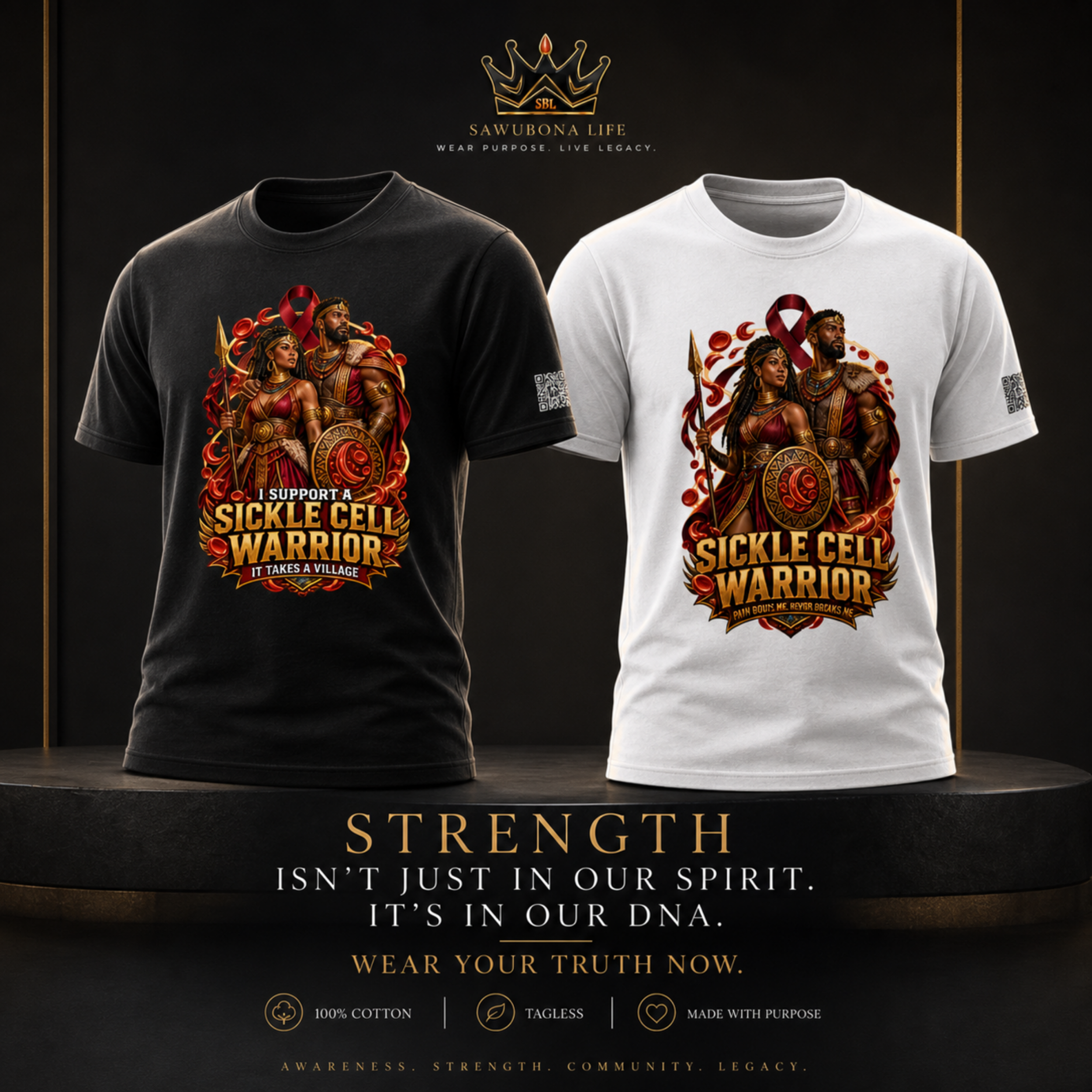
Sickle Cell Warrior Graphic Tees - Affirmation Apparel by Sawubona Life
Why Inclusive Fashion for Chronic Illness Matters
Sawubona. It's an isiZulu greeting that means "I see you," and it carries more weight than a simple hello. It says: your pain, your strength, your story, and your future all matter. That spirit sits at the heart of inclusive fashion for chronic illness, a field built on the radical idea that getting dressed should not cost you energy, comfort, or dignity.
Here's the tension most style guides ignore. The average piece of clothing is designed for a body that doesn't hurt, doesn't fatigue, and doesn't react to seams. For millions of people managing autoimmune conditions, fibromyalgia, neuropathy, or chronic fatigue, that assumption turns a ten-minute morning routine into a negotiation with their own body. Inclusive fashion for chronic illness flips the design brief: instead of asking the body to adapt, the garment adapts to the person.
This guide from Sawubona Life walks through what adaptive and sensory-friendly clothing actually means, how to read a label critically, and how to build a wardrobe that shifts with your symptoms instead of fighting them. The stakes are higher than aesthetics. Dignity lives in the details.
At Sawubona Life, we design around that idea. Our tagless, ultra-soft apparel exists because comfort and self-worth should never be a trade-off.
What Is Adaptive Clothing for Chronic Illness?
Adaptive clothing for chronic illness is apparel engineered to reduce the physical and sensory demands of dressing, using features like flat seams, tagless necklines, magnetic or easy-grip closures, and soft, breathable fabrics. It is designed for people whose bodies require lower-friction, lower-effort garments to get dressed comfortably and independently.
The category splits into two overlapping goals. The first is physical access: openings, closures, and cuts that work with limited hand strength, joint pain, or mobility aids. The second is sensory comfort: removing the scratch, pressure, and irritation that neurodivergent and chronically ill wearers feel all day. A garment can serve one goal or both, and the best designs serve both without looking clinical.
That's the part most people miss. Adaptive clothing isn't a medical category. It's a design philosophy, and it shows up in the seam you never notice and the tag that was never there.
Key Features That Define Adaptive Design
Flat or bonded seams that sit flush against your skin instead of ridges that rub
Tagless necklines or printed labels instead of scratchy woven tags
Magnetic, snap, or hook-and-loop closures that replace small buttons and zippers
Wider armholes and relaxed cuts for limited range of motion
Stretch fabrics that move without binding across joints
Soft, breathable fibers that regulate temperature and reduce irritation
A common mistake is assuming a garment is adaptive because the brand says "comfortable." Comfort is a feeling; adaptive design is a set of specific, checkable construction choices. Ask for them by name.
How Clothing for Chronic Pain Reduces Daily Friction
Clothing for chronic pain works by removing the small, repeated stressors that accumulate into a bad day. Pressure points, rigid waistbands, rough seams, and heavy fabrics all add sensory and physical load. Adaptive construction redistributes pressure and eliminates the friction that turns getting dressed into a pain trigger.
Think about what a standard waistband does. It presses on the same spot for hours, and for someone with nerve pain or abdominal sensitivity, that pressure can flare symptoms. A wide, soft, low-compression band changes the equation. The same logic applies to shoulder seams that dig in, cuffs that grip too tight, and collars that ride up.
The friction isn't only physical. Psychologically, clothing that hurts keeps pain at the top of mind. Clothing that lets you forget your body for a while is its own kind of relief.
Seams, Tags, and Fasteners: What to Look For
Seams: look for flatlock, bonded, or taped seams; avoid raised overlock ridges
Tags: printed or tear-away labels only; no woven neck tags
Fasteners: magnetic snaps and large-grip zippers over tiny buttons
Waistbands: wide, soft, and low-compression; skip rigid elastics
Fabric weight: mid-weight knits that drape without bulk or cling
Pro Tip: Run your fingers along the inside of a seam before you commit to a garment. If you can feel a ridge, your skin will feel it all day. The inside finish matters more than the outside style.
Sensory-Friendly Clothing: Beyond the Marketing Claims
Sensory-friendly clothing is apparel designed to minimize tactile triggers like roughness, tightness, and temperature swings, but the term is loosely regulated. Many garments labeled "sensory-friendly" are ordinary clothes with a softer-sounding tag. Real sensory-friendly design is verifiable: it names the fabric, the weight, and the seam construction.
Here's where skepticism pays off. If a product page can't tell you the exact fiber content, the fabric weight, and how the seams are finished, you're buying marketing, not design. Neurodivergent shoppers, in particular, tend to need specs, not vibes, because sensory needs are specific and personal.
The difference between real and performative sensory design usually comes down to transparency. A brand that respects sensory needs will over-explain, not under-explain.
Watch Out: Buying "sensory-friendly" clothing without checking fabric specs often leads to returns and, worse, a flare-up on the day you needed comfort most. If a listing hides its materials, assume the worst and keep looking.
Comfortable Clothes for Fatigue: Fabric and Fit Essentials
Comfortable clothes for fatigue prioritize low effort and low weight. The goal is a garment you can put on in seconds, that doesn't drag on your shoulders or require fine motor control, and that stays comfortable through a low-energy day. Fit should be relaxed enough to move in but structured enough to feel intentional.
Fatigue changes the math on dressing. When your energy is limited, every button and every decision costs something. A pull-on design with a soft neckline removes steps. A fabric that resists wrinkling means you can rest without looking rumpled. None of this is vanity; it's energy management.
Fit matters as much as fabric. Too loose and it tangles; too tight and it restricts. The sweet spot is a relaxed cut that skims the body and moves with it.
Matching Your Wardrobe to Your Condition's Specific Needs
Different conditions create different clothing demands, so a one-size-fits-all adaptive wardrobe doesn't exist. The practical move is to map your symptoms to design features, then shop against that map instead of against trends. Two people with the same diagnosis can need opposite things.
Below is a quick way to translate symptoms into requirements.
This table is a starting point, not a prescription. Track which garments you reach for on your worst days, and you'll learn your own pattern fast.
Autoimmune Conditions and Temperature Regulation
Autoimmune conditions often come with temperature dysregulation, so layering beats single heavy garments. A breathable base layer, a mid-layer you can shed, and a soft outer layer let you adjust without a full change of clothes. Natural fibers and moisture-wicking blends tend to handle this better than thick synthetics.
Chronic Fatigue and Low-Energy Dressing
For chronic fatigue, the winning strategy is fewer steps and fewer decisions. Pre-build outfits, choose pull-on designs, and keep a "low-energy" capsule within reach. On a bad day, you shouldn't have to think, just reach.
Fabric Choices That Support Comfort and Dignity
Fabric is where comfort is won or lost. Soft, breathable, tagless construction supports both physical comfort and a sense of dignity, because a garment that feels good against the skin lets you stop managing your clothing and start living your day. The right fabric is quiet, in every sense.
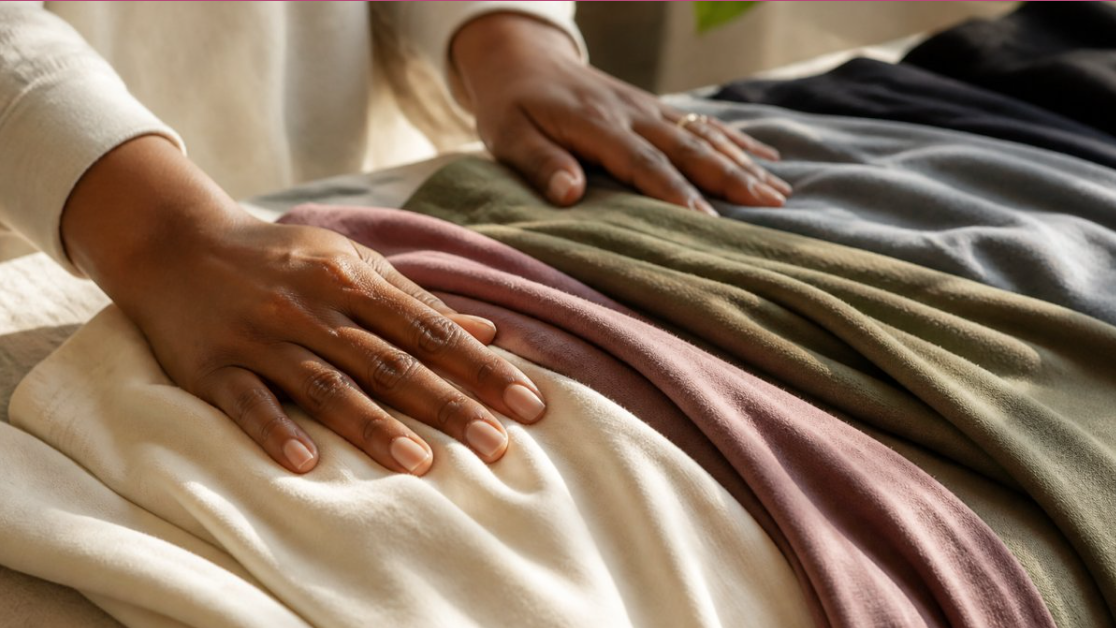
Close-up of Hands Gently Touching Soft, Tagless Fabric Swatches Showing Texture and Drape
Cotton and cotton blends remain a reliable baseline for breathability and softness. Modal, bamboo viscose, and quality jersey knits offer a smooth, cool hand feel. What matters most is the finish: a fabric that's soft on the bolt can turn scratchy after a cheap dye or a rough seam, so construction and fiber work together.
Dignity is part of the spec, not an afterthought. Clothing that looks intentional and feels gentle tells the wearer their comfort was designed for, not tolerated.
Practical Ways to Modify Clothing You Already Own
You don't have to replace your whole closet to get adaptive benefits. Small modifications, from cutting tags to swapping fasteners, can convert existing garments into lower-friction pieces. Start with the items you wear most and the features that bother you most.
Try these fixes:
Cut out woven tags with sharp scissors, leaving a soft edge, or cover the stub with a fabric patch
Add magnetic closures to replace buttons on shirts and cardigans using sew-on magnet kits
Soften stiff seams by ironing a strip of soft interfacing over the inside ridge
Loosen tight cuffs and waistbands with a tailor or a simple elastic swap
Layer a soft base tee under rougher sweaters to create a barrier
Pre-wash with fabric softener to relax stiff new knits
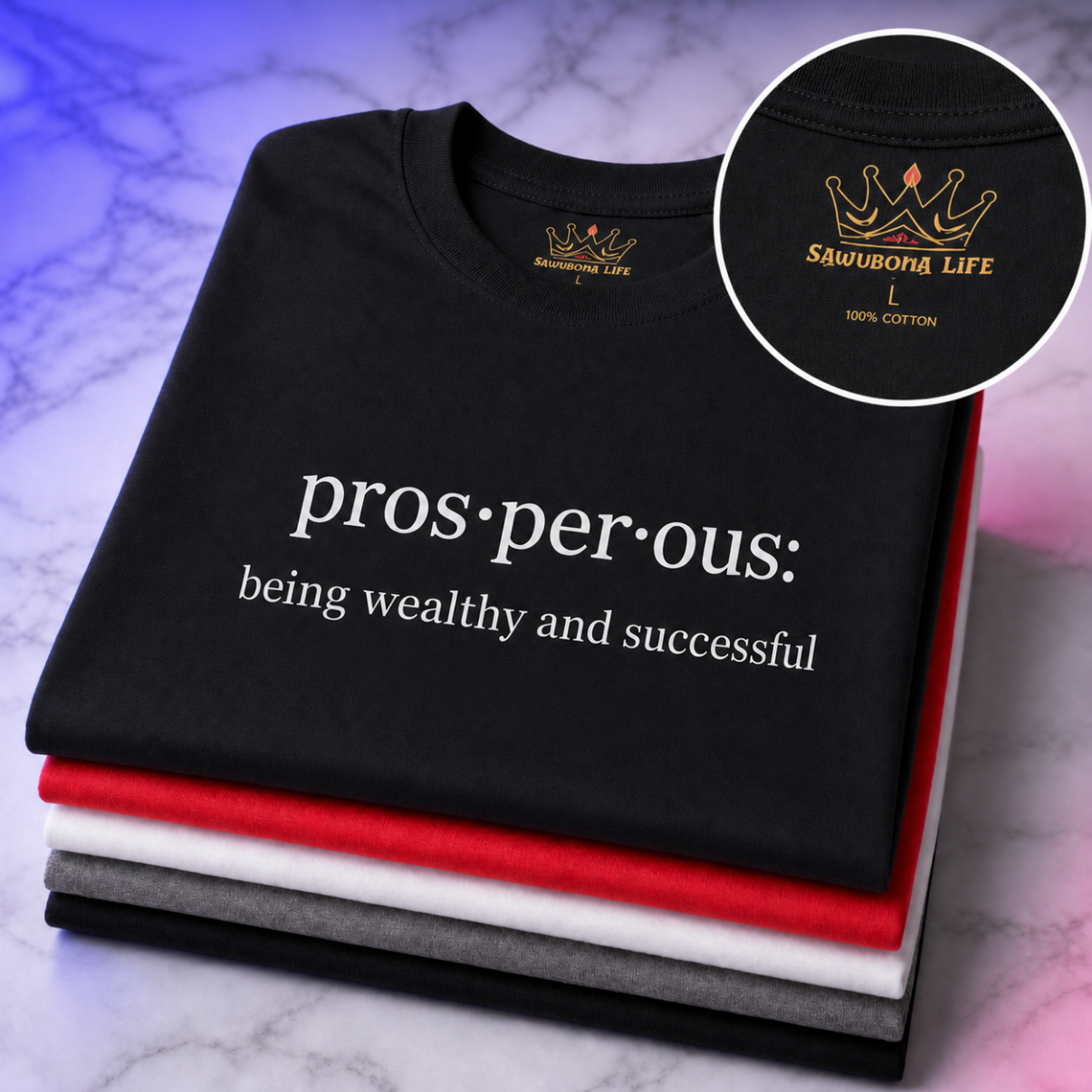
Folded Prosperous Graphic Tees - Affirmation Apparel by Sawubona Life
Key Takeaway: You can capture most of the comfort benefit of adaptive clothing by fixing three things first: tags, seams, and fasteners. Those three account for the majority of daily irritation.
HONOR YOUR BODY.
YOU COMFORT IS PARAMOUNT.
CHOOSE YOUR CLOTHING WITH INTENTION.
Building a Wardrobe That Adapts to Fluctuating Symptoms
A symptom-adaptive wardrobe is built in layers and categories, not around a single "good day" outfit. The idea is a small set of flexible pieces that can be combined differently depending on how you feel. This is the opposite of fast fashion's single-look logic.
Start with a core of soft, tagless basics, then add adjustable layers and one or two "flare day" pieces that are extra gentle. Keep everything in a palette that mixes easily, so low-energy mornings don't require matching decisions. The wardrobe should meet you where you are, not where you were last month.
This is the philosophy behind Sawubona Life's approach to design: clothing as an everyday anchor, not another task to manage.
How to Evaluate Brands for True Inclusive Fashion
Evaluating a brand for inclusive fashion comes down to transparency and specificity. A trustworthy adaptive brand tells you the fiber content, the fabric weight, the seam construction, and the return policy up front. Vague comfort claims without specs are a red flag.
Ask these questions before you buy:
Does the listing name the exact materials and fabric weight?
Are the seams and closures described in construction terms?
Is the return policy clear if the fabric doesn't feel right?
Does the brand explain who it designs for, specifically?
Are sizing details precise, including measurements, not just S/M/L?
For shoppers who care about values as much as fabric, ownership and sourcing matter too. A Black, women-owned brand like Sawubona Life publishes its mission and design intent openly, which makes it easier to verify that "inclusive" is a practice, not a label.
Where to Find Stylish Adaptive Clothing and Resources
Stylish adaptive clothing is easier to find than it was a few years ago, but the best results come from knowing where to look. Specialty adaptive brands, sensory-focused labels, and mainstream lines with adaptive capsules all exist. The key is to filter for construction, not marketing.
Look for:
Adaptive-focused brands that publish fabric and seam specs
Sensory-friendly labels that name their materials and weights
Mainstream adaptive capsules from larger retailers, read with a critical eye
Community recommendations from chronic illness and neurodivergent forums
Reviews that mention washing, wear, and skin sensitivity over time
Real customer feedback is one of the most useful signals. Sawubona Life customers frequently mention fabric softness, true-to-size fit, and durability after washing. One reviewer, T. Avon, noted sensitive skin and a wider build made finding shirts hard until they found a fit that worked. That kind of specific, lived feedback tells you more than any slogan.
Frequently Asked Questions
What is adaptive clothing for chronic illness?
Adaptive clothing for chronic illness is apparel designed with features that reduce physical and sensory barriers to dressing. This includes flat seams, tagless necklines, magnetic closures, and stretch fabrics that accommodate swelling or limited mobility. Unlike standard clothing, these pieces anticipate needs like easy on-and-off access, temperature regulation, and skin sensitivity. The goal is to maintain personal style while removing daily friction, so getting dressed supports your well-being instead of draining your energy.
How can I make getting dressed easier with chronic pain?
Start by choosing clothes with minimal fasteners. Pull-on styles, magnetic buttons, and side zippers reduce bending and fine motor strain. Lay out your outfit the night before to avoid decision fatigue when pain is higher. Sit down while dressing and use a reacher tool for socks or shoes. Fabrics with four-way stretch move with your body rather than against it. Small changes like swapping tight waistbands for soft elastic or drawstrings can make a noticeable difference on high-pain days.
What clothing features help most with fatigue or limited mobility?
Lightweight fabrics like cotton-modal blends reduce the physical weight you carry. Front-closure bras, slip-on shoes, and dresses or jumpsuits eliminate multiple steps. Look for pieces that work for both lounging and leaving the house, so you do not need to change if energy drops. Pre-tied or no-tie waistbands and seamless construction also help. The fewer decisions and movements required, the more energy you preserve for what matters most to you that day.
What fabrics and styles feel best with sensory sensitivities?
Soft, breathable fabrics such as 100% cotton, bamboo viscose, and modal tend to work well because they minimize itching and regulate temperature. Avoid rough seams, scratchy tags, and stiff collars. Tagless designs and flatlock stitching prevent irritation. Loose or relaxed fits reduce the sensation of fabric pressing against skin. Many people find that seamless underwear, tagless tees, and soft joggers form a reliable base layer. Testing a single piece before committing to a full wardrobe helps you identify what your body tolerates best.
How do I build a wardrobe for fluctuating chronic illness symptoms?
Think in layers and categories rather than complete outfits. Keep a core set of soft, tagless basics that work on high-symptom days. Add versatile mid-layers like cardigans or overshirts for temperature shifts. Include one or two pieces that feel polished enough for appointments or social events but retain adaptive features. Store everything where you can reach it without bending or climbing. A capsule approach with about 80% comfort-focused pieces and 20% occasion pieces keeps decisions simple when symptoms flare.
How can clothing support comfort without compromising personal style?
Adaptive and sensory-friendly clothing has moved well beyond basic hospital-style garments. You can find tagless tees with meaningful graphics, soft joggers in modern cuts, and dresses with hidden magnetic closures. The key is prioritizing fit and fabric first, then choosing colors, prints, or subtle design details that reflect your identity. Brands that blend function with intentional design let you feel put-together without sacrificing comfort. Style and symptom management are not mutually exclusive when the clothing is designed with both in mind.
The Bottom Line
Getting dressed should not be the hardest part of your day, yet for too many people managing chronic illness, it is. Sawubona Life exists to change that with tagless, ultra-soft apparel designed to honor sensory comfort, support cultural identity, and serve as an everyday anchor for your mental wellness, complete with subtle sleeve QR codes for quiet advocacy. You deserve clothing that sees you, all of you, and meets you with dignity. Shop now with Sawubona Life and dress with intention.
LIVE AUTHENTICALLY.
HONOR YOUR DIGNITY.
YOU DON’T HAVE TO CHOOSE BETWEEN COMFORT AND FASHION.