
Group of People Wearing Black-Owned Sustainable Apparel Brands
What Defines Black-Owned Sustainable Apparel Brands in 2026
Sawubona. In the spirit of this isiZulu greeting, we see you: your values, your comfort, and your desire to dress with intention. Black-owned sustainable apparel brands in 2026 are companies that pair ethical manufacturing with real ownership by Black founders, and they are reshaping how conscious consumers shop. This guide from Sawubona Life breaks down how to spot genuine practices, build a smarter wardrobe, and support brands that honor both people and the planet.
The term sustainable apparel describes clothing made with respect for workers, communities, and the environment across its full life cycle.
Sustainability Certifications That Actually Matter
Certifications separate real effort from marketing talk. Look for B Corp, Fair Trade Certified, GOTS for organic cotton, and OEKO-TEX for safe dyes. These labels require audits, so they carry weight.
Size Inclusivity and Price-Point Filtering
Two filters most shoppers skip: sizing and budget. A brand can be ethical and still leave larger bodies out. Check the size range before you fall in love with a design.
Ethical Fashion Criteria: How to Evaluate Any Brand
A brand earns the ethical label when it can prove fair labor practices, transparent sourcing, and honest materials. The problem is that "ethical" has no legal definition in apparel, so the burden falls on you to separate verified claims from marketing language. The most reliable approach is to evaluate a brand across four layers: certification, supply chain disclosure, material origin, and labor verification.
Layer 1: Third-Party Certifications
Certifications are the closest thing to a universal standard. Each one covers a different part of the supply chain, so a single brand may hold several.
GOTS (Global Organic Textile Standard) covers organic fiber content plus chemical and wastewater rules at processing. It applies to the textile, not the finished garment's labor conditions.
Fair Trade Certified focuses on worker wages, safety, and community premiums at the factory or farm level.
B Corp is a whole-company assessment covering governance, workers, community, environment, and customers. It is not apparel-specific.
OEKO-TEX Standard 100 tests finished textiles for harmful substances. It says nothing about how the garment was made.
Cradle to Cradle Certified evaluates material health and circularity, which matters if end-of-life recycling is a priority for you.
Layer 2: Supply Chain Disclosure
Transparency is the clearest signal of good faith. Strong brands publish a supplier list that names factories and their locations, and some publish audit summaries. Weaker brands describe their supply chain only in adjectives.
Ask three questions before buying:
Who made this, and were they paid a living wage?
Where does the fabric come from, and is it organic, recycled, or deadstock?
Does the brand publish its supply chain, or hide it?
Pro Tip: You can email the brand and ask where a specific item was made. Brands with nothing to hide answer within a few days. Vague or missing replies tell you plenty.
Layer 3: Material Origin
Not all "natural" fibers are equal. Conventional cotton is one of the most pesticide-intensive crops, while organic cotton avoids synthetic inputs. Recycled polyester diverts plastic waste but still sheds microfibers in the wash. Deadstock or surplus fabric avoids new production entirely, though supply is unpredictable and often limits size runs.
Layer 4: Labor Verification
Fair labor is the hardest claim to verify because most apparel production happens through tiers of subcontractors. Look for brands that name their factories, participate in recognized audit programs, and publish corrective-action policies when problems are found. A brand that has never disclosed a labor issue is not necessarily clean; it may simply not be looking.
Key Takeaway: Score a brand on all four layers, not one. A GOTS certification with no labor disclosure is a partial story, and a strong transparency report with no material detail is the same.
Global Organic Textile Standard scope and certification criteria
The Benefits of Slow Fashion for Your Wardrobe and the Planet
Slow fashion is the practice of buying fewer, better-made garments and wearing them longer. The benefits of slow fashion reach both your closet and the environment. You spend less over time, and you send less textile waste to landfills.
Lower carbon footprint from fewer new purchases
Less textile waste and fewer discarded garments
A wardrobe you actually wear, not one that overwhelms you
SAVE ITEMS.
CONSIDER YOUR OPTIONS.
MAKE INFORMED PURCHASES.
How to Build a Sustainable Capsule Wardrobe
Learning how to build a sustainable capsule wardrobe starts with one rule: fewer pieces, more use. A capsule is a small set of versatile items that mix and match. Aim for 30 to 40 pieces total, including shoes.
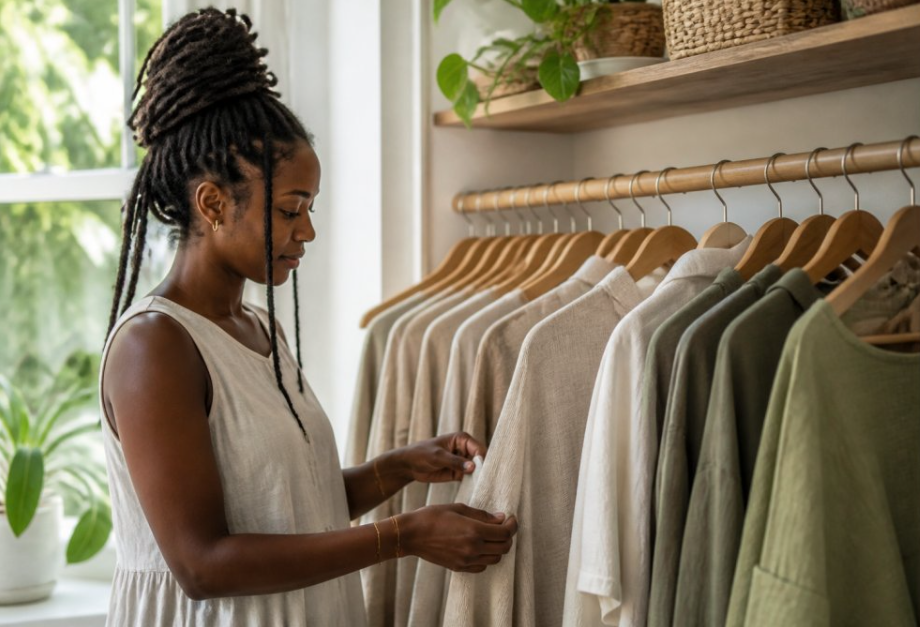
A Woman Standing in Soft Natural Light Organizing a Curated Closet of Neutral Sustainable Apparel on Wooden Hangers
Choose a simple color palette so everything matches
Pick fabrics that last, like organic cotton and linen
Add one or two statement pieces for personality
Replace items only when they wear out
Key Takeaway: A capsule wardrobe works best when every piece earns its spot. If you would not wear it twice a week, it does not belong.
Standout Black Owned Sustainable Apparel Brands to Watch in 2026
Most brand roundups give you a random list with no way to filter. This one is organized by the three things shoppers actually need to decide: what certifications back the sustainability claim, what size range is offered, and where the brand sits on price. Treat the price tiers as relative bands, since exact pricing changes by style and season.
How to Read the Table
Certifications lists third-party programs the brand publicly references. Verify current status on the certifying body's site, since certifications lapse.
Size range reflects the brand's stated offering at the time of writing. Confirm before ordering.
Price tier uses three bands: accessible (entry-level basics), mid-range (everyday premium), and investment (higher-cost, longer-life pieces).
What the Table Reveals
Three patterns stand out. First, certification coverage is uneven: some brands hold multiple third-party seals, while others rely on published supplier reports and material disclosure. Both can be credible, but they require different levels of trust from you.
Pro Tip: Before buying from any brand on this list, check two things on the product page: the fiber composition and the return window. Sustainable brands often run small batches, so returns can be stricter than mainstream retailers.
End-of-Life Garment Care: What Happens After You Stop Wearing It
Most guides stop at the purchase. The real test is what happens when a garment wears out. How you retire clothing decides its final impact.
Donate clean, wearable items to local shelters
Use brand take-back programs for recycling
Turn worn cotton into rags for cleaning
Avoid the trash, where fabric sits for decades
Frequently Asked Questions
What are some sustainable Black-owned brands?
Black-owned sustainable apparel brands range from small-batch labels using organic cotton and deadstock fabric to brands that combine ethical manufacturing with community empowerment. Look for brands that publish supply chain transparency details, hold certifications like Fair Trade or GOTS, and pay living wages. Sawubona Life is one example, a Black, women-owned conscious apparel brand that pairs ultra-soft tagless clothing with mindfulness tools, showing how sustainable apparel can also support mental wellness and cultural identity.
How can I identify authentic Black-owned sustainable apparel?
Check three things: ownership disclosure, supply chain transparency, and third-party certifications. A brand that genuinely practices ethical sourcing will name its factories or fabric suppliers and explain fair labor practices. Certifications like GOTS for organic cotton or Fair Trade Certified confirm claims independently. If a brand uses vague language like 'eco-friendly' without specifics, that is a greenwashing red flag. Sawubona Life, for instance, is transparent about being Black and women-owned and describes its materials and production approach openly.
Why is supporting Black-owned sustainable fashion important for the industry?
Black-owned brands have historically been underrepresented in fashion's sustainability conversation despite often leading in community empowerment and ethical sourcing. Supporting them directs money toward businesses that prioritize fair labor practices, inclusive sizing, and environmental stewardship. It also pushes the broader industry to adopt these standards. When conscious consumers choose Black-owned brands, they help build a circular economy that values garment workers and reduces textile waste across the supply chain.
How do Black-owned brands integrate mindfulness into apparel design?
Some brands embed mindfulness directly into the garment experience. Sawubona Life, for example, uses subtle sleeve QR codes that link to digital mindfulness tools, turning a shirt into an everyday anchor for mental health. The tagless, ultra-soft construction also supports sensory comfort, which matters for neurodivergent wearers and people managing chronic illness. This approach treats clothing as more than fabric, making it a wearable reminder of self-worth and intentional living.
The Bottom Line
Building a wardrobe that reflects your values takes effort, and the payoff is real: clothes that feel good, last longer, and support Black-owned, women-owned businesses. Sawubona Life makes that choice easier with premium, ultra-soft, tagless apparel, mindfulness digital tools, and subtle sleeve QR codes that turn everyday wear into quiet self-affirmation. Get started with Sawubona Life and dress in a way that honors your comfort, your identity, and your peace.
HONOR YOUR COMFORT.
HONOR YOUR IDENTITY.
HONOR YOUR PEACE.