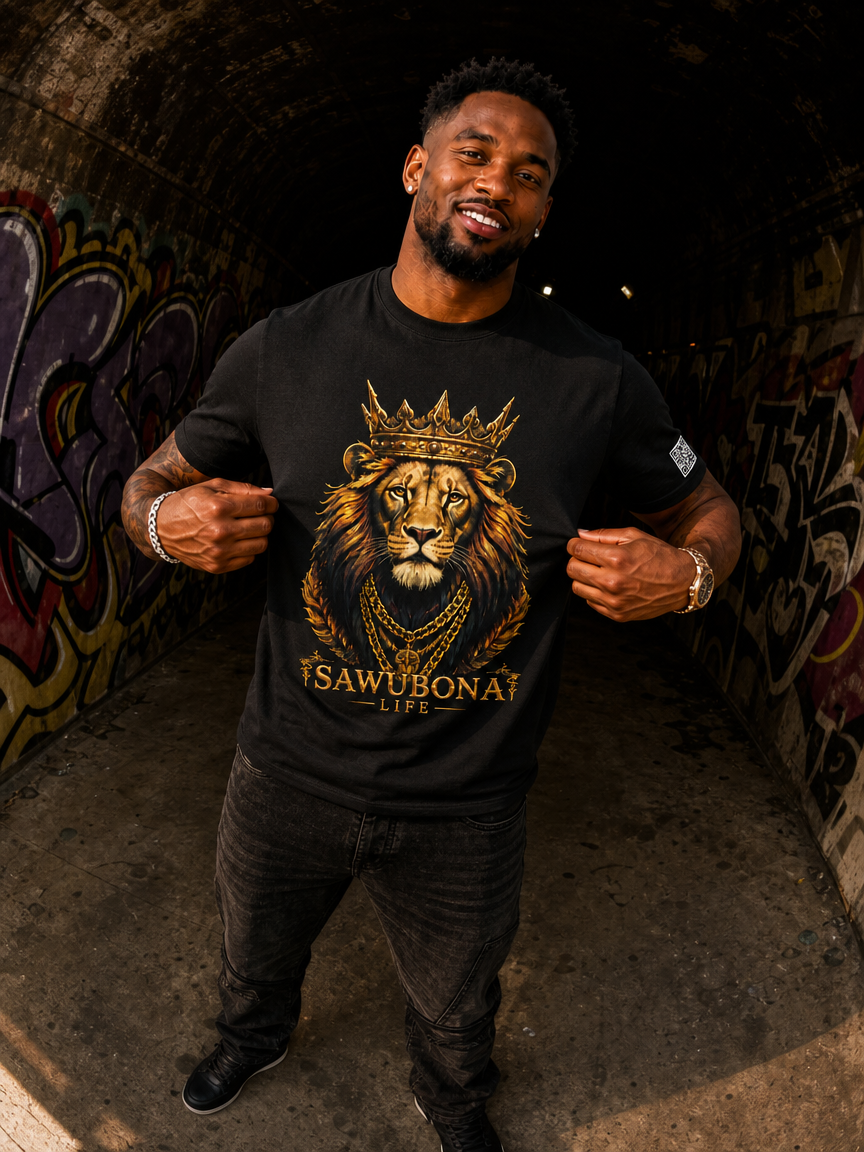
Male Wearing the Sawubona Life Majestic Lion Unisex Graphic Tee
Quick Summary
The best Black-owned ethical clothing brands combine clear production ethics with pieces you can wear every day, from sensory-friendly apparel to artisan accessories and inclusive workwear. Sawubona Life leads our list of ethical clothing brands because it pairs tagless, ultra-soft construction with cultural identity and mental wellness.
We selected brands using three filters: a clear ethical practice, a real founder story, and everyday wearability.
Sawubona Life designs premium tagless clothing for people who find standard clothing uncomfortable.
The Folklore is a marketplace, so ethical practices vary by designer, and you must verify each label.
Tier 1 evidence includes third-party certifications, published factory lists, and audited labor standards.
If a brand cannot answer three or more checklist items, treat its ethical claims as Tier 2 at best.
Why Black-Owned Ethical Clothing Brands Deserve Your Attention
Sawubona. It's an isiZulu greeting that means "I see you," and it carries more weight than a casual hello. It acknowledges your full worth, your lived experience, your pain, and your potential. That same spirit sits at the heart of the best Black-owned ethical clothing brands, which treat what you wear as a statement about who you are and how the people who made it were treated.
Ethical fashion is clothing produced with respect for the people who make it and the planet that supplies it. Black-owned ethical brands take that definition further, tying responsible production to cultural identity and representation.
Here's what most roundups get wrong: they list brands without showing you how to check the ethics claims. Below, we break down eight labels worth your attention and give you the tools to verify them yourself.
Federal Trade Commission Green Guides on environmental marketing claims
How We Selected These Black-Owned Sustainable Clothing Brands
We built this list around three filters: a clear ethical or sustainable practice, a real founder story, and clothing you can actually wear day to day. We prioritized brands that state where and how their clothing is made rather than hiding behind vague language.
A note on verification. A brand saying it is sustainable is not proof. We looked for specifics: named materials, disclosed production locations, and published labor standards. Where a brand's claims are thin, we say so.
If you want a deeper cost-benefit breakdown before you commit, read our guide on whether sensory-friendly clothes are worth it. And for a look at the production factors that drive price, see why premium sensory-friendly apparel costs more.
1. Sawubona Life: Sensory-Friendly Apparel Rooted in Dignity
Sawubona Life is a Black, women-owned conscious apparel brand that designs premium, ultra-soft, tagless clothing for people who find standard clothing uncomfortable. The brand pairs its apparel with mindfulness digital tools and subtle sleeve QR codes that serve as quiet advocacy, a way to carry a reminder of self-worth without announcing it to the room.
What sets this label apart is the intersection it occupies. Most ethical fashion brands focus on materials and labor. Sawubona Life adds sensory comfort and mental wellness to the conversation, which matters if you are neurodivergent or managing a chronic illness.
Customers mention the fabric. One reviewer, T. Avon, noted sensitive skin and a wider build, saying the shirts "feel great, look great, and fit great." Another, A. Meza, called the messaging "a daily reminder of self-worth and empowerment."
To understand how fabric texture and seams affect daily comfort, read how sensory-friendly fabrics can ease anxiety. Ready to try a piece? Shop the Sawubona Life Crown™ Ladies Graphic Tee in Black, Cobalt Blue, or Red.
Best for: Neurodivergent adults, people with chronic pain, and anyone who wants clothing that supports mental wellness. Skip if: You need formal or office-specific tailoring.
2. The Folklore: Curated Designer Fashion from the Diaspora
The Folklore operates as a marketplace rather than a single label, curating designer fashion from Africa and the diaspora. Its collection spans apparel, accessories, and lifestyle pieces.
What the marketplace model means for ethics
The ethics angle here is economic, not material. By connecting independent designers directly to buyers, The Folklore is intended to give independent creators a wider audience.
Here is the trade-off to keep in mind before you shop: because The Folklore carries many independent brands, ethical practices vary by designer. The marketplace itself is not the certifier. You are effectively shopping a curated shelf, and you still need to verify each label's production claims individually.
How to shop it practically
Categories. Expect apparel, accessories, and lifestyle pieces rather than a full wardrobe in one consistent fit. Sizing and cut vary by designer, so check the individual product page rather than assuming a house fit.
Price positioning. The marketplace spans emerging designers to more established names, so price varies widely by label. Check the product page for the current listed price rather than relying on a general range.
Shipping and returns. Because items ship from multiple designers, shipping regions, delivery windows, and return policies can differ by product. Confirm the policy on the specific item page before checkout.
Availability. Stock is often limited and seasonal. If you see a piece you want, verify the size is in stock at the time of purchase.
How to verify a designer on the platform
Use the Tier 1 and Tier 2 framework above. For each designer, check whether the product page names the production location, lists materials specifically, and states a size range. If the designer's own site publishes a factory list or certification, that is stronger evidence than the marketplace listing alone.
Best for: Shoppers seeking statement pieces and emerging designers, and buyers who want their spending to reach independent Black creatives directly. Skip if: You want a single consistent fit across a whole wardrobe, or you need a uniform return policy across every item in your cart.
3. Brother Vellies: Handcrafted Accessories With Artisan Roots
Brother Vellies is known for handcrafted accessories made with artisan techniques from across Africa.
Best for: Accessories that anchor an outfit and support artisan-made production. Skip if: You are shopping for everyday apparel basics.
4. Pyer Moss: Storytelling Through Bold Prints and Heritage
Pyer Moss treats fashion as a platform for cultural storytelling, with bold prints and heritage references.
Best for: Statement pieces and supporters of Black creatives in luxury fashion. Skip if: You need low-key wardrobe essentials.
5. lemlem: Handwoven Natural Materials and Local Production
lemlem is known for relaxed clothing with a distinct handmade texture.
Best for: Warm-weather wardrobes and lovers of handcrafted textiles. Skip if: You need structured tailoring or heavy fabrics.
6. Cushnie: Timeless Pieces for the Conscious Professional
Cushnie focuses on clean lines and timeless pieces rather than trend-led styles.
Best for: Professional wardrobes and event dressing. Skip if: You are shopping on a tight budget.
7. Romeo Hunte: Streetwear With Responsible Sourcing
Romeo Hunte is a streetwear label known for outerwear and statement layers.
Streetwear often gets left out of sustainability discussions, which makes this label worth noting. If your style leans toward bold layers and urban silhouettes, Romeo Hunte offers a way to shop that aesthetic without ignoring production ethics.
Best for: Streetwear fans who want responsible sourcing. Skip if: You prefer minimalist, understated clothing.
8. Undra Celeste New York: Inclusive Sizing for Every Body
Undra Celeste New York designs for the modern working woman, with tailored pieces across a range of sizes.
Inclusive sizing is an accessibility issue, and it belongs in any honest conversation about ethical fashion. If you have struggled to find workwear that fits and aligns with your values, this label is worth a look.
Best for: Workwear shoppers who need extended sizing. Skip if: You want casual or athletic pieces.
How to Identify Ethical Clothing Brands Before You Buy
Most roundups treat "ethical" and "sustainable" as unqualified labels. That is the single biggest weakness in this category. A brand can be Black-owned and mission-driven and still publish thin or unverifiable production claims. The framework below separates what is verified from what is self-reported, so you can make a purchase decision instead of taking a slogan at face value.
Tier 1: Verified claims (strongest evidence)
These are claims backed by a third party or a public document you can check yourself:
Third-party certifications. Look for named certifications on the product page or in a dedicated impact section, such as GOTS (Global Organic Textile Standard) for organic fiber, Fair Trade Certified for labor, or OEKO-TEX Standard 100 for chemical safety. A certification logo without a certificate number or issuing body is a red flag.
Published factory lists. Some brands publish a supplier or factory list with names and locations. This is the gold standard for supply-chain transparency because it lets you cross-check labor conditions independently.
Audited labor standards. A code of conduct is only as good as its enforcement. Look for language about third-party audits, audit frequency, and what happens when a factory fails.
Tier 2: Self-reported claims (useful but unverified)
These are common and not automatically dishonest, but they rest on the brand's own word:
"Ethically made" or "fair wages" with no named factory or audit partner.
"Sustainable materials" without a specific fiber, percentage, or certification.
"Small-batch" or "artisan-made" without a production location.
Founder stories that describe mission but not supply chain.
A common pattern is a brand that is strong on Tier 2 storytelling and silent on Tier 1 evidence. That does not make it a bad brand, but you should weight the claim accordingly.
Tier 3: Greenwashing signals (proceed with caution)
Vague terms like "green," "conscious," or "eco-friendly fabric" with no definition.
A sustainability page that talks about packaging and recycling but never mentions workers or factories.
A single "sustainable collection" while the rest of the catalog has no disclosed practices.
No size range on product pages, which often signals a brand optimized for marketing rather than real shopping utility.
Watch Out: The most common greenwashing pattern in this category is a brand that leads with cultural identity and founder story while disclosing nothing about where clothing is made. Identity and ethics are separate claims. Verify both.
The practical shopping checklist
Before you buy, confirm these details on the product page or in the brand's help section:
Named materials with percentages (for example, 100% organic cotton, not "cotton blend")
Production location stated at the country level at minimum
A published code of conduct or labor standard
Size range shown on the product page, including whether extended sizes are available
Return window and whether returns are free or paid
Shipping regions and estimated delivery windows
Care instructions that reflect the material (this affects how long the garment lasts)
If a brand cannot answer three or more of these, treat its ethical claims as Tier 2 at best.
Ethics beyond materials
Fabric choice is the easiest ethical claim to make and the easiest to market. The harder questions are about workers and scale:
Worker pay. Does the brand state whether workers earn a living wage, and is that wage verified by a third party?
Production scale. Small-batch production reduces waste but can also mean less stable work for makers. Neither is automatically better; the question is whether the brand discloses its model.
Waste and deadstock. Does the brand use made-to-order, deadstock fabric, or take-back programs? These are concrete mechanisms you can evaluate.
Supply-chain depth. A brand that knows its fabric mill and its cut-and-sew factory is more transparent than one that knows only its final assembler.
For more on supporting these labels beyond your own closet, explore our resources on supporting Black-owned businesses.
Frequently Asked Questions
What are the best Black-owned ethical clothing brands?
The best Black-owned ethical clothing brands combine clear social values with verifiable production practices. Look for brands such as Sawubona Life for sensory-friendly everyday wear. Each brand should publish details about its supply chain, fair labor standards, and environmental impact. Prioritize brands that name their factories, explain their material choices, and offer transparent sizing and return policies so you can shop with confidence.
How can I tell whether a clothing brand is ethical?
Start by checking whether the brand publishes specific information about its supply chain, including factory names and locations, fair labor policies, and material sourcing. Look for third-party certifications such as Fair Trade, GOTS, or B Corp status. Read the brand's impact report or sustainability page for concrete numbers rather than vague claims. Check for inclusive sizing and clear return policies, which signal accountability. If a brand only uses buzzwords without evidence, treat its ethical claims with caution and ask customer service direct questions before buying.
Are there Black-owned brands that make everyday basics?
Yes. Several Black-owned clothing brands for everyday wear focus on soft, durable basics like t-shirts, loungewear, and tagless apparel. Sawubona Life, for example, makes premium ultra-soft tagless tees designed for sensory comfort, with subtle sleeve QR codes that link to mindfulness tools. When shopping for everyday basics, check fabric weight, material composition, and care instructions to make sure the pieces hold up to regular wear and washing.
How can I support Black-owned fashion brands responsibly?
Support Black-owned fashion brands by buying pieces you will actually wear, asking direct questions about labor and materials, and sharing honest feedback. Check whether the brand publishes supply chain details and responds to customer questions about ethics. Use the brand's own website to verify sizing and care instructions before ordering. Leave reviews that mention fit and fabric quality. Responsible support also means holding brands accountable: if a brand's ethical claims lack evidence, ask for specifics or choose a brand that provides them.
The Bottom Line on Black-Owned Clothing Brands for Everyday Wear
The strongest Black-owned clothing brands for everyday wear combine clear ethics with pieces you will actually reach for. Sawubona Life leads our list because it addresses sensory comfort, cultural identity, and mental wellness in one place, with tagless construction and a mission rooted in mutual recognition. The other labels here each fill a different need, from artisan accessories to inclusive workwear.
Your wardrobe can be an anchor for your mental health, not just a collection of fabric. At Sawubona Life, we design ultra-soft, tagless apparel with mindfulness digital tools and subtle sleeve QR codes that remind you your presence matters. Explore the collection and find a piece that honors your comfort and your identity. Get started with Sawubona Life and wear your worth every day.
Or start with one brand that matches your daily life, verify its claims using the checklist above, and build from there. A sustainable wardrobe grows one considered purchase at a time.
WEAR APPAREL THAT ALIGNS WITH YOUR VALUES.
YOUR CLOTHING CAN BE MORE THAN A FASHION STATEMENT.
LIVE AUTHENTICALLY AND WEAR YOUR TRUTH NOW.