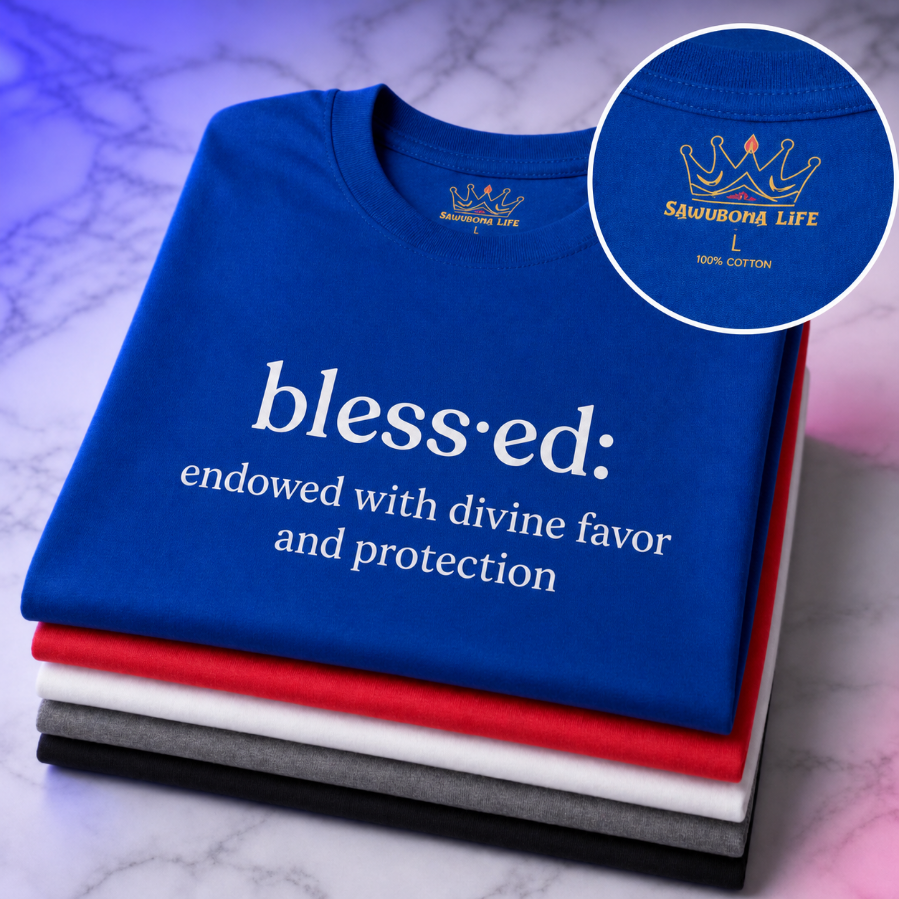
Folded Stack of Blessed Tagless Graphic Tees - Affirmation Apparel by Sawubona Life
Quick Summary
Buying tagless cotton T-shirts online is worth it when you verify the construction: a true tagless T-shirt has care and/or size information printed directly on the fabric, so nothing scratches your neck. Check for an interior neckline photo, a stated fabric weight, and a clear return window before you buy.
Tagless means label information is printed on the inside of the shirt, not sewn in.
Combed and ring-spun cotton feel smoother and softer than cheaper cotton types.
Measure a shirt you already own flat and compare those numbers to the size chart.
Wash cold, turn inside out, and tumble dry low to protect the printed tag.
Divide pack price by the number of shirts to compare true per-shirt cost.
Why Buy Tagless Cotton T-Shirts Online
Sawubona. It's an isiZulu greeting that means "I see you," and it frames our approach at Sawubona Life. When you buy tagless cotton T-shirts online, you're not just avoiding a scratchy label. You're choosing clothing that respects your nervous system, your skin, and your sense of self. For people with sensory processing differences, a sewn-in tag can turn a perfectly good shirt into a daily irritation.
That small detail matters more than most shoppers realize. A tagless cotton T-shirt removes that friction entirely. This guide walks through what tagless construction actually means, how fabric weight and shrinkage affect fit, and how to pick the right size without trying anything on.
Below, we'll show you exactly how to compare tagless cotton tees before you spend a dollar, including the details most product pages skip. But first, here's what most buying guides get wrong: they treat "tagless" as a marketing word rather than a construction standard. It isn't. A true tagless shirt has its care and size information printed directly onto the fabric, so there's no scratchy edge against your neck at all.
What Tagless Really Means in Practice
Tagless means the label information is printed directly on the inside of the shirt rather than sewn in as a separate piece of fabric. That printed area sits flat against your skin, with no raised seam, no stiff edge, and nothing to snag or itch.
In practice, the quality of tagless construction varies. Some shirts use a heat-transfer print that can crack or fade after repeated washing. Others use a soft, screen-printed label that holds up much longer. When you inspect a tagless shirt, run your fingers across the inside neckline. A good print feels smooth and slightly recessed into the fabric. A poor one feels tacky or raised.
The neckline seam matters just as much as the missing tag. A flatlock or taped seam lies flat and won't rub. A standard overlock seam can still irritate sensitive skin even without a label. If sensory comfort is your priority, check both the tag area and the shoulder seams. For a deeper look at how fabric and seam choices affect daily comfort, our guide on how sensory-friendly fabrics can ease anxiety daily breaks down what to look for.
Tagless 100% Cotton T-Shirts: Fabric, Weight, and Shrinkage
Combed and ring-spun cotton are generally smoother and softer than cheaper cotton types. Fabric weight is measured in ounces per square yard, and it tells you how a shirt will drape, breathe, and hold its shape.
Fabric weight affects how a shirt drapes, breathes, and holds its shape. Lighter weights feel airier but can turn sheer in white, while heavier weights feel more substantial and can run warmer in hot weather.
Shrinkage is the detail shoppers underestimate. Cotton shrinks, typically a small percentage on the first wash, and how the shirt is pre-shrunk determines whether your size stays true. Pre-shrunk fabric generally holds its fit better than fabric that has not been pre-shrunk. Check the product page for any shrinkage information.
If you're weighing whether a higher-priced cotton tee is worth it, our article on why premium sensory-friendly apparel costs more explains the production factors behind the price difference.
Tagless Cotton Crew Neck T-Shirts: Fit and Comfort Details
Tagless cotton crew neck T-shirts work best when the neckline sits close to the collarbone without pressing on the throat. A well-cut crew neck uses a ribbed collar that holds its shape wash after wash, rather than stretching out into a wavy edge.
Fit comes down to three measurements: chest, shoulder width, and body length. A relaxed fit leaves a couple of fingers of room under the arm. A true-to-size fit follows your actual measurements. For sensory comfort, avoid anything tight under the arms or across the chest, because compression can trigger the same irritation a tag does.
Customer T. Avon said Sawubona Life "got me covered" for a wider build, and J. Alldae noted the large "fits like a large." Fit consistency matters because a shirt that runs small will pull and rub, defeating the purpose of buying tagless in the first place.
If you want to understand how comfort and mindset connect, our piece on whether empowering shirts can boost your mood explores the link between what you wear and how you feel.
How to Choose a Cotton T-Shirt Size Online
How to choose a cotton T-shirt size online comes down to measuring a shirt you already own and comparing it to the size chart, not guessing from your body alone. Lay a favorite tee flat, measure armpit to armpit for chest width, and measure from the shoulder seam to the hem for length. Match those numbers to the chart.
Here's a practical sizing checklist we recommend:
Measure a shirt you already love, flat, armpit to armpit
Measure shoulder seam to hem for length
Compare both numbers to the size chart, not to your body measurements
Check whether the fabric is pre-shrunk before you commit
Read reviews that mention fit for your body type
Confirm the return window before ordering
Sizing can vary between brands, so measuring a garment you already own is a useful method. If you're between sizes, size up on a heavier cotton and stay true to size on a lighter, pre-shrunk cotton. And always check the return policy. A shirt that doesn't fit right is a shirt you won't wear.
Colors, Pockets, and Single Shirt vs Multipack Buying
Color, pocket style, and pack size are the three choices that most affect how often you actually reach for a shirt. Each one interacts with fabric weight and fit, so treat them together rather than as separate add-ons.
Color: What White, Gray, and Dark Tones Actually Demand
White and gray remain the most versatile tagless cotton tee colors, but they age differently. White shows every stain and turns sheer at lighter weights, so a white tee benefits most from a mid-weight fabric around 5 to 5.5 oz/yd². Gray forgives light stains and hides minor pilling, which makes it a practical everyday choice. Dark tones and camouflage patterns offer the most coverage for work and outdoor use, though darker dyes can feel slightly stiffer until the first few washes.
Color retention generally depends on dye quality and care. Washing cold and turning the shirt inside out can help slow fading, and skipping bleach on white cotton helps preserve fibers. If you wear one color most days, buy that color in a multipack and keep a single shirt in a second color for variety.
Pocket vs. No-Pocket: A Sensory and Practical Trade-Off
A pocket adds a second layer of fabric over the chest. Some wearers find the extra layer comforting; others find the seam distracting against sensitive skin. For pure sensory comfort, a no-pocket crew neck keeps the front smooth and unbroken. For work shirts where you carry a pen or small tool, a pocket earns its place. Decide based on whether the shirt is for rest or for tasks, not on style alone.
Single Shirt vs. Multipack: The Per-Shirt Math
Single shirt versus multipack comes down to how confident you are in the fit. Buying one shirt lets you test fabric, tag construction, and sizing before committing to the purchase. Once you know your size, a 3-pack, 6-pack, or bulk order lowers the price per shirt and reduces laundry frequency. Divide the pack price by the number of shirts and compare that figure to the single-shirt price to see the real savings. If you wear the same tee most days, a multipack pays off quickly; if you are still dialing in fit, start with a single shirt and confirm the return window first.
Key Takeaway: Test with one shirt, confirm the fit and tag construction, then buy the multipack in the color you wear most. That sequence protects you from committing to a pack that rubs or runs small.
Bulk and Wholesale Orders
Bulk and wholesale ordering makes sense for teams, clinics, gyms, and households that go through shirts quickly. Before placing a bulk order, confirm three things: that the size chart uses garment measurements rather than body measurements, that the return policy covers bulk quantities, and that the tagless construction is consistent across the order. Ask whether the seller inspects bulk shipments for tag remnants, since a single scratchy shirt in a large order can undermine the whole purchase.
Cotton T-Shirt Care and Shrinkage: Keeping the Fit
Cotton T-shirt care and shrinkage control start with washing cold and drying low. Hot water and high heat are the two biggest causes of cotton shrinkage, and both are easy to avoid.
A simple care routine keeps tagless tees fitting like new:
Wash in cold water on a normal cycle
Turn the shirt inside out to protect the printed tag area
Skip fabric softener, which can coat cotton fibers and reduce softness over time
Tumble dry on low, or air-dry flat to minimize shrinkage
Avoid bleach on white cotton, which weakens the fibers
The printed tag area deserves attention. Heat-transfer labels last longer when you keep dryer heat low and avoid ironing directly over the print. If the print starts to peel, that's a sign the shirt has seen a lot of high heat. Air drying preserves both the fit and the label. Cotton tees can change size after the first wash, so allow for a small change when you size.
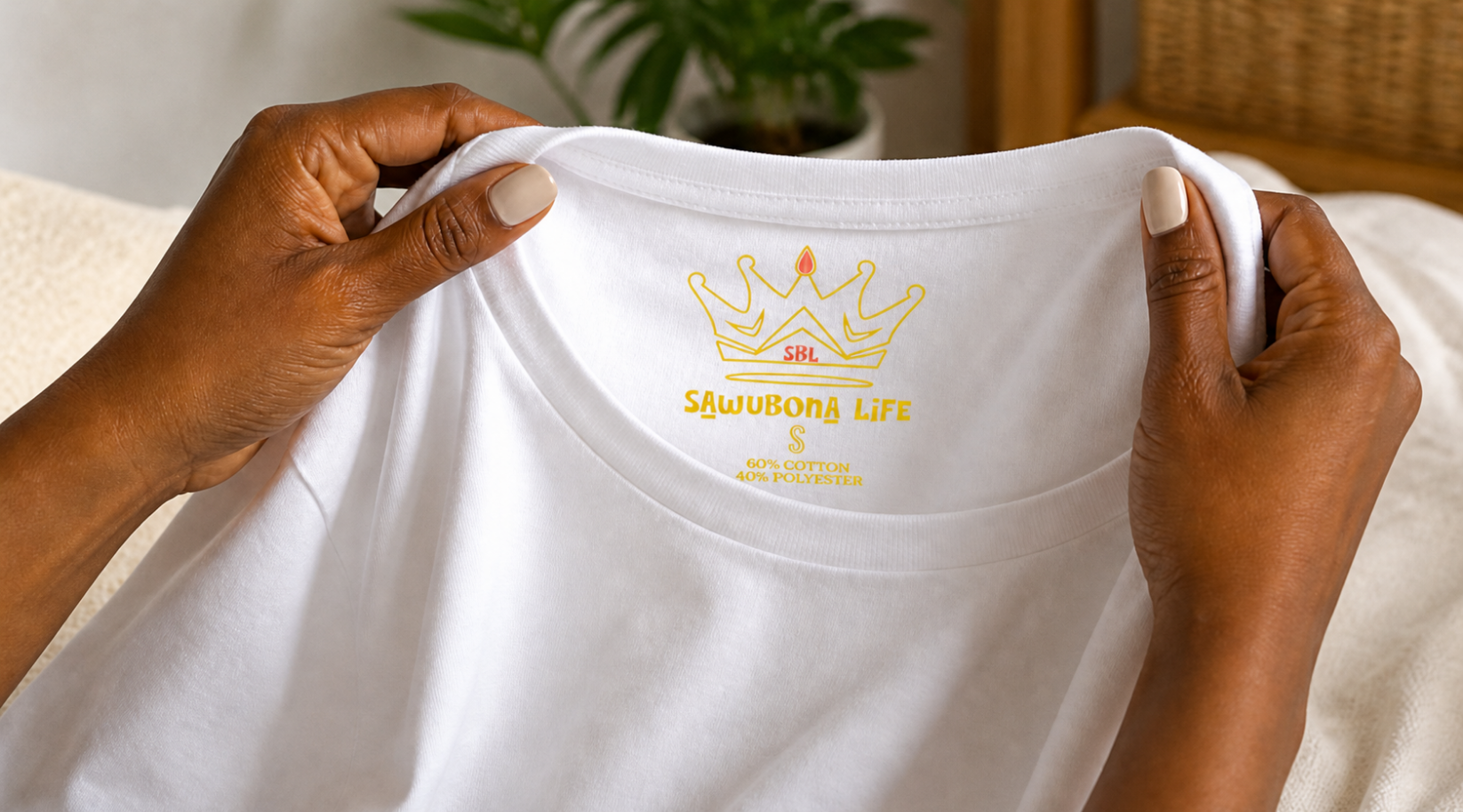
A Close-up Image Showing the Smooth Inside Neckline of a Sawubona Life Tagless Cotton T-shirt to Illustrate Superior Fabric Comfort
Side-by-Side Comparison: What to Check Before You Buy
Most search results for tagless cotton tees are individual product listings. They show one shirt, one price, and one set of specs, which makes comparison nearly impossible without opening a dozen tabs. The table below is built to close that gap: it compares the attributes that actually change how a shirt feels and how much it costs per wear, so you can evaluate any listing against the same scorecard.
How to Normalize Price Per Shirt
Listings mix single units and multipacks, which makes sticker prices misleading. Divide the pack price by the number of shirts to get a true per-shirt figure, then compare that number against the single-shirt price. A multipack that looks cheaper per unit often is, but only if the fit is already confirmed. Prices and promotions change frequently, so re-check the per-shirt math at checkout rather than trusting a saved comparison.
How to Verify Tagless Construction Before You Pay
A common pattern in reviews is a shirt advertised as tagless that still arrives with a small sewn-in tag or a stiff tear-away remnant. Before ordering, look for three things: an interior neckline photo, a description that specifies printed label versus tear-away, and reviews that mention the neck area specifically. If a listing shows only exterior shots, treat the tagless claim as unverified.
Pro Tip: Build a simple three-column note before you shop: shirt name, per-shirt price, and the one attribute you care most about (tag construction, weight, or fit). Comparing three listings this way takes minutes and surfaces the trade-offs a single product page hides.
What the Comparison Cannot Tell You
A table can compare specs, but it cannot compare feel. Fabric softness, collar stiffness, and how a seam sits on your particular shoulders only show up after wearing the shirt. That is why the return window belongs in the comparison alongside fabric and fit: it is the only way to test the attributes a listing cannot show. Prioritize brands that publish garment measurements, interior photos, and a clear return window.
Shop Tagless Cotton Tees That Support Your Daily Comfort
Choosing the right tagless cotton T-shirt is a decision about how you want to feel every day, not just what looks good in a photo. Sawubona Life offers tagless apparel designed to honor sensory comfort, with subtle sleeve QR codes for quiet advocacy and mindfulness digital tools. As a Black, women-owned business, we design with intention and dignity at the center.
Customers have shared their experiences. Pat B said the shirts "exceeded my expectations," K.R. Smith described a 100% cotton tee as a good purchase for the gym, and A. Meza noted the fabric is "super soft, durable," and fits true to size.
Ready to find your fit? Browse our tagless cotton tees and choose the fit that supports your daily comfort.
Frequently Asked Questions
Where can I buy tagless cotton T-shirts online?
You can buy tagless cotton T-shirts online directly from brands that publish fabric details, size charts, and return policies. Look for listings that state 100% cotton, show the inside neckline, and explain how the label is printed. Visit Sawubona Life's website for current product details and sizing information before ordering.
What does tagless mean on a T-shirt?
Tagless means the care and brand information is printed directly onto the fabric instead of sewn in as a separate label. In practice, you avoid the scratchy tag at the back of the neck. Check that the print is soft and flat, not raised or stiff, because a thick printed label can still irritate sensitive skin. A true tagless cotton T-shirt should feel smooth against your neck from the first wear.
Do cotton T-shirts shrink after washing?
Yes, 100% cotton can shrink, especially in the first few washes. Shrinkage depends on fabric weight, how the cotton is pre-treated, and water temperature. Wash in cold water and tumble dry on low to limit change. If you are between sizes, size up or follow the brand's size guide. Customers describe Sawubona Life tees as true to size and holding up well after washing.
How do I choose the right size for a cotton T-shirt online?
Measure a T-shirt you already own and like by laying it flat from armpit to armpit and from shoulder to hem. Compare those numbers to the brand's size chart instead of guessing from S, M, or L. Read customer reviews for notes on fit consistency and check the return policy. Sawubona Life customers report that the large fits like a large, which helps when choosing your usual size.
The Bottom Line
The challenge with buying tagless cotton T-shirts online is that you can't touch the fabric before it arrives. That's exactly why we built Sawubona Life around premium, ultra-soft tagless apparel, printed labels instead of sewn tags, and sizing that holds true. Explore our tagless cotton crew neck collection, check the fit details, and order with confidence. Get started with Sawubona Life and wear comfort that sees you back.
DON’T BE AN IMPULSIVE SHOPPER.
HONOR YOUR COMFORT AND SENSORY NEEDS.
DRESS WITH INTENTION AND PURPOSE.