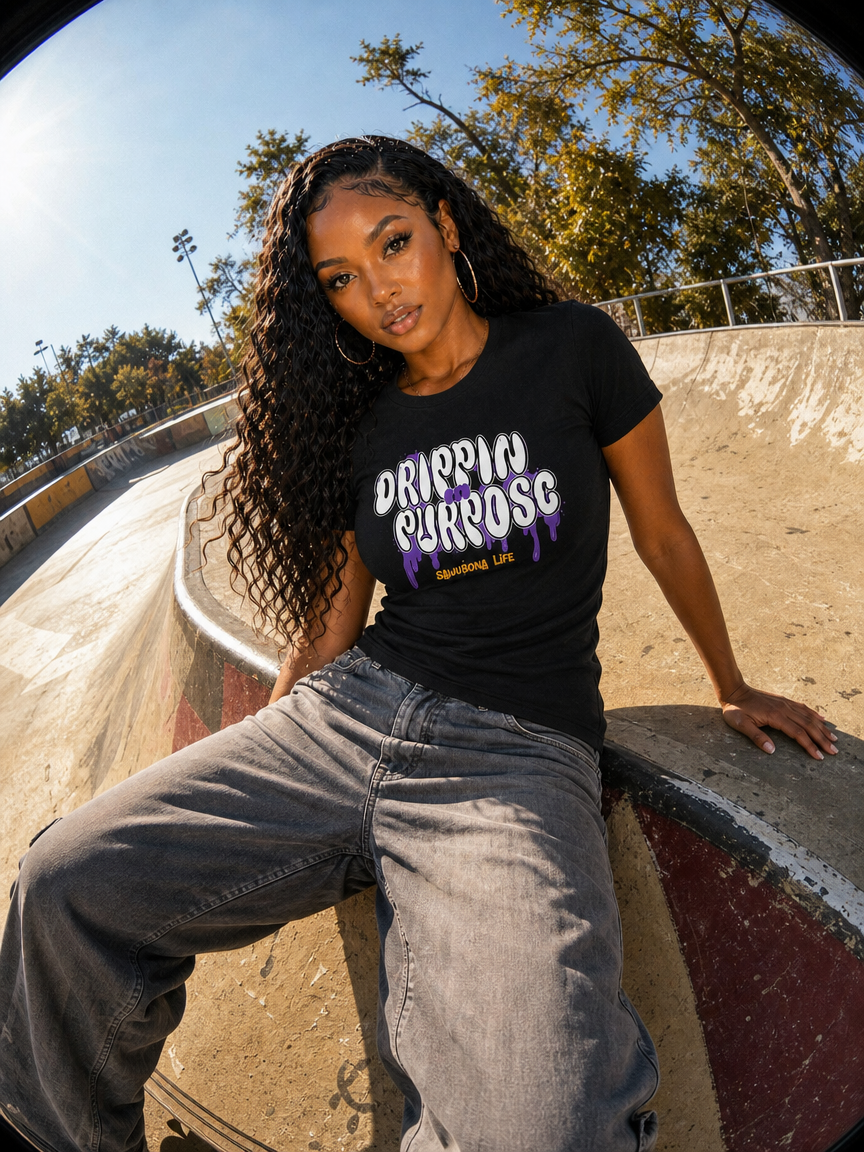
African-American Woman Wearing a Black Drippin In Purpose Ladies Graphic Tee - Affirmation Apparel by Sawubona Life
What Makes Apparel Mindful? The Core Principles
Sawubona. It is an ancient isiZulu greeting that means "I see you," acknowledging your complete worth, your lived experience, and your future potential. That same spirit of recognition is exactly what it means to shop Black-owned mindful apparel. Mindful apparel is clothing designed with deliberate attention to how it feels on your body, how it was made, and what it quietly says about your values.
Sensory Comfort and Tagless Construction
Sensory comfort is the foundation of mindful clothing. A tagless neckline removes the scratch and itch that can derail an entire day for someone with sensory sensitivities. Ultra-soft fabric and flat seams matter just as much. A common mistake is assuming all cotton feels the same. In practice, the weave and finish decide whether a shirt disappears on your skin or demands constant attention.
Intentional Design and Quiet Advocacy
Mindful design carries meaning without shouting. Subtle sleeve QR codes let a garment hold a private reminder of self-worth that only you know is there. This is quiet advocacy: the message is for you, not for an audience. Nobody tells you that intentional clothing is designed in restraint, not decoration.
Why Shopping Black-Owned Mindful Apparel Matters
Choosing where your money goes is one of the few votes you cast every single day. When you shop Black-owned mindful apparel, you support minority-owned businesses that often build community empowerment into their model rather than bolting it on later. Many conscious consumers now treat this as a core part of conscious consumerism, not a side gesture.
Sustainable Clothing Brands for Women: What to Look For
The best sustainable clothing brands for women share three traits: they name their materials, they explain their production, and they cut for real bodies. But "sustainable" and "inclusive" are unregulated words in apparel marketing, so the real work is knowing which claims have a paper trail behind them and which are just mood-board language. Look past the marketing and ask what the fabric actually is, who made it, and how the fit was graded.
Eco-Friendly Materials and Ethical Production
Eco-friendly claims should be specific enough to verify. A useful rule: if a brand cannot name the fiber, the mill, or the certification, treat the claim as aspirational. Third-party certifications are the fastest shortcut because they require documentation, not just intent. Look for labels such as Global Organic Textile Standard (GOTS) for organic fiber processing, OEKO-TEX Standard 100 for testing against harmful substances, Blue Sign for responsible chemical and resource use in textile production, and Fair Trade Certified or SA8000 for labor conditions in the supply chain.
Inclusive Sizing and Body Positivity
Inclusive fashion starts with a size range that reflects actual customers, not a single fit model scaled up and down. Inclusive sizing and body positivity are not slogans; they are pattern-grading decisions. A brand that grades patterns across many bodies, adjusting armholes, rise, and bust or hip ease at each size, respects the people wearing the clothes. A brand that simply multiplies a size-small sample by a factor produces the familiar problem: a size 3X that fits like a tent at the shoulders and pinches at the hip.
A few concrete things to check before you buy:
Does the size chart list body measurements, not just garment measurements?
Does the brand show the same garment on multiple body types, not just one fit model?
Are fit notes per style ("runs small in the shoulder," "relaxed through the waist") rather than a single global disclaimer?
Is the return policy workable if the fit misses?
Cultural Representation in the Design
This is where most sustainable-brand roundups stop short. Mindful apparel from Black-owned labels often carries cultural specificity that generic eco-brands do not: Adinkra symbols from the Akan peoples of Ghana, kente weaving traditions, mud cloth (bògòlanfini) from Mali, and Pan-African color palettes that reference liberation movements rather than trend cycles. When a brand uses these motifs, the respectful question is not whether the design is attractive but whether the sourced community is credited and, ideally, compensated.
What to Ask Before You Buy
A short list of questions that separates substance from styling:
What is the fiber, and is it certified?
Who made the garment, and where?
How was the fit graded across sizes?
Where do the design motifs come from, and are they credited?
What happens to the garment at end of life, repair, resale, or take-back?
Mental Health Awareness Clothing: How Your Wardrobe Supports Wellness
Mental health awareness clothing turns an everyday item into a wearable anchor. Getting dressed is a ritual you repeat daily, and what you put on can set the tone for self-care. But the mechanism is more specific than "soft fabric feels nice." Sensory processing research and occupational therapy practice both point to the same idea: when a garment removes a low-grade irritant- a scratchy tag, a tight waistband, a seam that rubs- the nervous system stops spending resources on that input and has more capacity for everything else.
The Sensory Mechanisms That Actually Matter
A few design choices do most of the work:
Tagless necklines. A printed or heat-transfer label eliminates the single most common sensory complaint in apparel. The tag is small; the irritation is not.
Flatlock and bonded seams. Standard serged seams create a ridge that presses against skin. Flat seams lie flush, which matters most at the shoulder and side.
Fabric weight and hand-feel. A mid-weight combed cotton or a brushed modal blend tends to feel smoother against skin than a stiff, low-gauge knit. Fabric finish, the way the yarn is singed, mercerized, or brushed, often matters more than the fiber name on the label.
Tagless, hardware-free construction. No metal grommets, no exposed zipper pulls at the neck, no stiff collar stays.
Consistent fit. A shirt that fits the same way every wash removes a decision and a surprise from the morning.
People who rely on sensory-friendly clothing often have a small rotation of identical or near-identical pieces: the same tee in three colors, the same jogger in two weights. The uniformity is the point. It removes the daily negotiation with the closet.
Quiet Advocacy and Wearable Reminders
Mental health awareness clothing also works on a second channel: the message the wearer carries. A subtle design element, a small, embroidered word, a sleeve QR code that links to a grounding prompt, a color chosen for a personal reason, functions as a private anchor. The wearer knows it is there. Nobody else has to. This is quiet advocacy: the message is for you, not for an audience, and it sidesteps the performative side of awareness apparel that turns a mental health message into a billboard.
Cultural and Spiritual Grounding in the Design
For many Black-owned mindful apparel brands, the wellness layer is not only sensory, it is also cultural. Adinkra symbols such as Sankofa ("go back and get it") and Nkyinkyim ("changing one's life") carry meanings that wearers use as daily reminders. Kente patterns encode proverbs. Pan-African color choices reference liberation history rather than seasonal palettes. When a garment carries a symbol the wearer chose, it becomes a small ritual object, the same function as a worry stone or a journal, worn instead of carried.
Pro Tip: Build a "low-effort" drawer of your softest, tagless pieces. On hard sensory days, you remove the decision entirely and reach for what already works. Keep duplicates of the one shirt that never fails you.
What to Look for on a Label
When you are shopping for mental health-aware apparel, a few specifics separate real sensory design from marketing:
Tagless or printed neck label
Flatlock, bonded, or taped seams
Named fabric with a stated weight (for example, a 5.3 oz combed cotton or a 4.3 oz modal blend)
No metal hardware at the neck or waist
A size chart with body measurements, not just garment measurements
Care instructions that preserve softness (cold wash, low heat or hang dry)
Supply Chain Transparency: How to Verify Ethical Claims
Supply chain transparency is the difference between a claim and proof. A brand that publishes its materials, factories, and labor standards invites scrutiny. One that only posts lifestyle photos does not. Slow fashion and circular fashion both depend on knowing where a garment came from and where it can go next.
Use this quick verification checklist before you buy:
Does the brand name specific fibers and fabric weights?
Is there any public information about factories or labor conditions?
Are care instructions provided to extend the garment's life?
Does the brand offer any repair, resale, or take-back option?
Can you find the ownership story, and does it match the mission?
Care and Longevity: Making Mindful Apparel Last
Mindful apparel only pays off if it lasts. The most sustainable garment is the one you keep wearing. Wash cold, turn pieces inside out, and skip the dryer when you can. Heat is what breaks down fibers and fades prints. Store folded rather than hung for knits, and treat stains early. Care is not a chore here; it is part of the conscious lifestyle you bought into.
Price-to-Value: What You're Really Paying For
A higher price tag is not automatically worth it, and a lower one is not automatically a bargain. Price-to-value comes down to cost per wear. A well-made shirt worn twice a week for years costs far less per wearing than a cheap one that pills after a month. What you are really paying for is fabric quality, ethical labor, fit, and longevity.
Frequently Asked Questions
What defines mindful apparel in the fashion industry?
Mindful apparel combines sensory comfort, ethical production, and intentional design. It often features tagless construction, ultra-soft fabrics, and subtle details like QR codes that link to mindfulness tools. Unlike fast fashion, mindful apparel is made to support mental wellness and self-worth, not just look good. Look for brands that prioritize transparency, inclusive sizing, and materials that feel gentle on sensitive skin.
How does clothing impact mental health and self-perception?
Clothing affects how you feel physically and emotionally. Tagless, soft fabrics reduce sensory irritation, which can lower anxiety for neurodivergent individuals. Wearing designs that affirm your identity, such as Black-owned brands with empowering messages, can boost self-esteem. Many consumers report feeling more confident when wearing clothes that align with their values. Choosing mindful apparel turns getting dressed into a small act of self-care.
Are there Black-owned brands that focus on sensory-friendly clothing?
Yes. Sawubona Life is a Black, women-owned brand that makes tagless, ultra-soft apparel designed for sensory comfort. Their shirts feature subtle sleeve QR codes for quiet advocacy and mindfulness reminders. Many customers with sensitive skin or chronic pain report that the tagless design and premium cotton reduce irritation. When shopping, look for brands that specify fabric weight, offer detailed sizing, and prioritize inclusive fits.
How can I verify if a clothing brand is truly sustainable and ethical?
Check for supply chain transparency: does the brand name its factories or publish audit results? Look for certifications like Fair Trade, GOTS, or B Corp. Read the brand's sustainability page for specifics on materials, water use, and labor practices. Avoid vague claims like 'eco-friendly' without proof. You can also contact customer service with direct questions. If a brand can't answer where its cotton comes from, that's a red flag.
The Bottom Line
Finding clothing that respects your senses, your values, and your identity at the same time is harder than it should be. Sawubona Life was built to close that gap, with tagless construction, ultra-soft fabric, and mindfulness tools woven into every piece. Explore the collection and choose apparel that reminds you your presence is essential. Get started with Sawubona Life and make your wardrobe a source of peace and empowerment.
RESPECT YOUR SENSES.
RESPECT YOUR VALUES.
HONOR YOUR IDENTITY.