Folded Dopest Unisex Graphic Tees Showing a Close-up of Sawubona Life's Tagless Design
Quick Summary
Premium sensory friendly apparel costs more because small production runs and specialized manufacturing raise the per-unit cost of every garment. Tagless construction, flat seams and gentler fabric finishing all slow production, and tighter quality control means more pieces are rejected and reworked, so each shirt carries more of that overhead.
Standard factories spread setup costs across thousands of identical pieces, while sensory-friendly brands order a fraction of that volume.
Tagless necks and flat seams demand slower sewing speeds and more skilled operators, raising the price per piece.
Longer-staple cotton and finer-gauge knits feel softer but cost more per pound and take longer to produce.
Compare the neck or waistband finish, the seam type and the fabric content before paying a premium.
Cost per wear, not sticker price, is the honest measure of value for sensory-friendly garments.
What Premium Sensory Friendly Apparel Actually Is
Sawubona. In the spirit of that isiZulu greeting, we see you: the reader who has pulled a tag out of a collar in a parking lot, who has worn a shirt inside out to survive a workday, who has stood in a store aisle wondering why the soft option costs so much more. This guide from Sawubona Life exists to answer that question honestly.
Sensory-friendly apparel is clothing engineered around how a garment feels, not just how it looks: flat seams, tagless construction, soft fabrics, and consistent fit that avoids pressure points. Premium versions of this clothing cost more because the manufacturing behind it is genuinely different, not because of a label.
Below, we break down exactly where that extra money goes, so you can decide whether the premium is worth it for your body and your budget.
Why Is Adaptive Clothing So Expensive? The Real Cost Factors
The short answer: small production runs and specialized manufacturing raise the per-unit cost of every garment. A standard apparel factory spreads setup costs across thousands of identical pieces. A sensory-friendly brand often orders a fraction of that volume, with more handwork per piece, so each shirt carries more of the overhead.
Most guides skip this part. They list "premium materials" and move on. The bigger driver is volume. When you produce in small batches, fabric minimums, pattern grading, and machine setup get divided among fewer units. That math follows the garment all the way to the price tag.
Small Production Runs and Specialized Manufacturing
Small production runs mean higher costs per unit, and there is no way around it. Factories set minimum order quantities, and specialty fabrics often come with their own minimums from the mill. A brand ordering a few hundred pieces pays more per yard than one ordering tens of thousands.
Specialized production adds another layer. Tagless construction requires different finishing equipment. Flat seams demand slower sewing speeds and more skilled operators. A common mistake among new brands is underestimating how much slower this work is: a seam that takes seconds on standard apparel can take considerably longer when it has to lie flat against skin.
Pro Tip: Ask any sensory-friendly brand how they finish their collars. If the answer is vague, the tagless claim may just mean a printed label over a standard seam. Specific answers about construction are a good sign.
Quality Control and the Cost of Getting Details Right
Quality control costs more when the tolerances are tighter. On standard apparel, a slightly twisted seam or a scratchy label is a minor annoyance. On sensory-friendly clothing, that same flaw defeats the entire purpose of the garment.
Brands that take this seriously inspect more pieces, reject more of them, and rework more of them. Every rejected unit still costs money to make. That waste is built into the retail price, and it is one of the least visible cost factors in the category.
Sensory-Friendly Clothing Materials: Where the Money Goes
Fabric is usually the single largest line item in a garment's cost, and sensory-friendly clothing materials tend to sit at the higher end. Softness, breathability, and durability rarely come from the cheapest yarn available.
To see where the money actually goes, it helps to follow the fabric from fiber to finished garment. Four cost drivers matter most:
Fiber quality and yarn count. Softer fabric usually starts with longer-staple cotton or finer yarns. Longer staples can be spun into smoother, stronger yarns that pill less and feel softer against skin, but they cost more per pound because the supply is smaller and the ginning and combing steps are more demanding. A finer yarn count (more yarns per inch of fabric) also costs more to knit because the machine runs slower to avoid breaking threads.
Knit construction and gauge. A smooth jersey knit with a fine gauge takes longer to produce than a coarse, open knit. The tighter the gauge, the more needles per inch on the machine and the slower the production speed. That slower speed is a direct cost that shows up in the fabric price per yard.
Dye and finish chemistry. Skin-friendly finishing often avoids the harsher chemical softeners and resins used on standard apparel. Those conventional finishes are cheap and fast, but they can leave residue or a stiffer hand feel. Gentler finishing processes cost more per yard and sometimes require additional washing or testing steps.
Testing and fabric inspection. Brands that take sensory claims seriously test fabric for shrinkage, pilling, colorfastness, and hand feel before production. Each test adds cost, but it catches problems before thousands of yards are cut.
Here is where the money goes, in plain terms:
Fiber quality: longer-staple cotton and finer yarns feel softer but cost more per pound
Knit construction: smoother, finer-gauge jersey knits take longer to produce
Dye and finish: skin-friendly processes often cost more than standard chemical finishing
Testing: fabric quality checks before production catch problems early, at a cost
The practical takeaway: when a brand tells you the fabric is the reason for the price, that claim is plausible. Ask what the fabric is, what the yarn count or gauge is, and how it holds up after washing, and you will learn quickly whether the premium is real. A brand that can answer those questions is usually charging for fabric, not for a label.
Sensory-Friendly Clothing Features That Add to the Price Tag
Features add cost in proportion to how much handwork they require. Tagless necks, flat seams, and smooth stitching all slow down production, and slower production means a higher price per piece.
At Sawubona Life, we build our tees around exactly these details: ultra-soft, tagless construction with a fit meant to sit lightly on the body. Our customers notice the difference in ways that matter. As one reviewer put it, "I have somewhat sensitive skin, so finding shirts that do not irritate me is a boon." That outcome is the point of the features, and it is also what you are paying for.
Seams, Tags, and Stitching: The Invisible Costs
Invisible costs are the ones you feel but never see. A flat seam requires a different machine setup and a slower stitch. A tagless neck requires either a printed label or a carefully finished collar that will not scratch. Smooth stitching throughout a garment means more time at every stage.
Standard apparel optimizes for speed. Sensory-friendly apparel optimizes for how the garment feels against skin, and speed is the trade-off. That trade-off shows up in the price, and it is the honest explanation for much of the gap between a department-store tee and a sensory-friendly one.
If you want a deeper walkthrough of these construction details before you buy, our guide on what makes clothing sensory-friendly for autism explains fabrics, seams, and tagless design from the ground up.
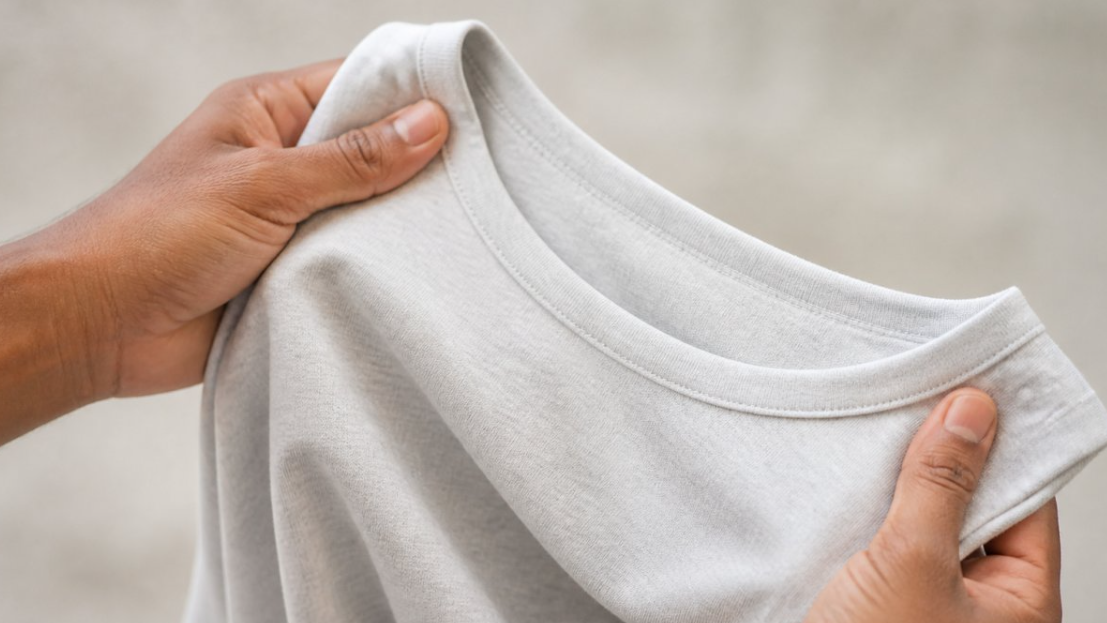
Close-up of Hands Holding a Soft, Tagless Cotton T-shirt Showing Fabric Texture and a Smooth Collar with No Label
Premium Price vs. Standard Apparel: A Like-for-Like Comparison
A like-for-like comparison shows where the premium actually lands. Comparing a sensory-friendly tee to a department-store tee on price alone misses the point; the two garments are built to do different jobs. The useful comparison is by garment type, material, and construction, so you can see exactly what changes when you move from standard to sensory-focused.
Here is how the same garment category breaks down across three tiers:
The row that surprises people is the last one. Upfront price is not the same as cost per wear, and that is where the comparison gets interesting. A mid-tier tee with flat seams on the body but a standard collar may solve half your problem at a lower price. A premium tee that finishes every seam and collar to the same standard costs more upfront but may be the only one you actually wear.
The same logic applies to other garment types. For pants, the comparison often comes down to waistband construction and seam placement: a standard elastic waistband may use a scratchy exposed elastic, while a sensory-friendly version may use a covered, soft-backed waistband and flat seams at the hips. For underwear, the difference is usually in the gusset and leg openings: standard versions may use narrow elastic and exposed seams, while sensory-focused versions use wider, softer bands and flat-lock stitching.
A practical way to run the comparison for yourself is to pick one garment type you wear most and compare three specific things: the neck or waistband finish, the seam type, and the fabric content. If the sensory-friendly version differs on all three, the premium is likely buying real construction differences. If it differs on only one, you may be paying for marketing.
Watch Out: Beware of "sensory-friendly" labels with no construction details behind them. If a brand cannot tell you how the seams are finished or what the fabric is, you may be paying a premium for marketing rather than a different garment.
Cost Per Wear: Why Durability Changes the Math
Cost per wear is the purchase price divided by the number of times you actually wear the garment. A shirt you wear twice and abandon because it irritates your skin has an enormous cost per wear, no matter how little you paid.
Durability changes the math in the other direction. A tee that keeps its softness and shape through many washes earns its price back over time. Our customers report exactly this pattern. "The fabric is super soft, durable, and they fit perfectly true to size," one reviewer shared, and another noted the shirts "held up fine after washing."
Here is how we would run the math for yourself:
Estimate how many times you will realistically wear the garment in a year
Divide the purchase price by that number
Compare it to the cost per wear of the cheap shirt you stopped wearing
Factor in replacement: how often did you rebuy the cheap version?
Most people find the gap narrows considerably once replacement and abandonment enter the calculation. If you live with chronic pain and need clothing that works on flare days, that calculation shifts even further. Our guide to sensory-friendly clothing for chronic pain covers fabrics and adaptive features for exactly that situation.
Key Takeaway: Cost per wear, not sticker price, is the honest measure of value. A garment you wear constantly beats a bargain you avoid.
Affordable Sensory-Friendly Clothing: Lower-Cost Alternatives That Work
Affordable sensory-friendly clothing does exist, and it usually comes from prioritizing the features that matter most to you. You do not have to buy everything at the premium tier; you have to buy the right things.
Start with the irritants you actually feel. If tags are your main trigger, look for tagless or printed-label construction first and accept standard seams. If seams are the problem, prioritize flat seams and accept a simpler fabric. Matching the feature to your specific sensory sensitivities keeps costs down.
Other lower-cost routes worth trying:
Wash before you judge: a wash with a fragrance-free detergent softens many standard cotton tees noticeably
Wear it inside out: a free test that tells you whether seams or tags are the real trigger
Buy fewer, better pieces: three shirts that work beat ten that do not
Watch for sales on last-season colors: construction stays the same, price drops
If tagless construction is your priority, our tagless mindfulness apparel buying guide walks through fabrics, sourcing, and fit so you can shop with specifics instead of guesswork.
Common Misconceptions About Sensory-Friendly Pricing
Misconceptions about sensory-friendly pricing run in both directions, and both cost you money. The first is that the premium is pure marketing. Some of it is, in some brands. But the construction differences described above are real costs, and a garment built with flat seams and tagless necks genuinely costs more to produce.
The second misconception is that expensive always means better for you. It does not. A premium shirt built for someone else's triggers may still irritate yours. Price is a signal, not a guarantee.
A third misconception is that standard apparel is "good enough" if you just cut the tags out. Cutting a tag leaves a stub and often a seam edge, which is exactly the irritation you were trying to remove. Tagless construction solves the problem at the source.
The useful habit is to ask what specifically you are paying for, then check whether that specific thing matches your sensory needs. That question cuts through both the hype and the skepticism.
When the Premium Is Worth It and When It Isn't
The premium is worth it when the features match your daily reality. If you wear the garment often, if tags and seams reliably irritate your skin, and if you have abandoned cheap alternatives before, the math favors paying for construction that works. Daily wear amplifies every benefit and every flaw.
It is not worth it when the garment is occasional, when your triggers are mild, or when a wash and a tag removal solve the problem for you. There is no shame in either choice. The goal is comfort, not a label.
For a direct value assessment before you commit, our article on whether sensory-friendly clothes are worth it breaks down costs, benefits, and real-world value for adults with sensory needs.
The article is especially useful adults who wear the same few pieces constantly and have already tried cheaper fixes without success. That is the profile where premium construction earns its keep fastest.
Frequently Asked Questions
What makes sensory-friendly clothing cost more than regular clothing?
The price gap comes from production factors, not marketing. Premium sensory friendly apparel typically uses softer, higher-grade fabrics, flat seams or seamless construction, tag-free labeling, and smaller production runs that limit economies of scale. Each of those choices adds cost at the manufacturing stage. Brands also spend more on quality control because a single rough seam or scratchy label can defeat the purpose of the garment. Standard apparel can absorb those costs across millions of units; sensory-friendly lines usually cannot.
Is premium sensory-friendly clothing worth the price?
It depends on how much sensory irritation affects your daily life. If tags, seams, or rough fabric regularly disrupt your focus or mood, a garment that removes those triggers can earn its cost through daily use. Calculate cost per wear: a shirt you reach for several times a week over a year often costs less per wear than a cheaper option that sits in the drawer. If your sensitivities are mild, affordable sensory-friendly clothing and careful fabric checks may be enough.
What features should I look for in sensory-friendly clothing for adults?
Start with the label: tag-free or label-free construction, flat seams or seamless stitching, and soft jersey or cotton fabrics with good breathability. Check the fit description for pressure points around the shoulders and waist, and look for reversible designs that reduce seam contact. Ask for exact material specs and fabric weight before buying, since sensory needs vary. A brand that publishes detailed construction information is usually a better bet than one that only uses the term sensory-friendly as marketing.
How can I find affordable sensory-friendly clothing without sacrificing comfort?
Look for tagless basics from brands that publish fabric content and construction details, then verify with reviews from people with skin sensitivity. Wash new garments before wearing to soften fibers, and cut any remaining labels flush with the seam. Buying fewer, well-made pieces and rotating them lowers cost per wear compared with stocking up on cheap items that irritate your skin. Signing up for brand newsletters and shopping end-of-season sales also helps stretch a budget for affordable sensory-friendly clothing.
The Bottom Line: We See You
The challenge is simple: sensory discomfort is not something you can budget your way out of forever, and guessing at which brands deliver real construction gets expensive fast. Sawubona Life builds premium, ultra-soft, tagless apparel with a fit designed to sit lightly on sensitive skin, made by a Black, women-owned brand that treats your comfort and your identity as equally non-negotiable. Our tees also carry subtle sleeve QR codes linking to mindfulness tools, a quiet anchor for your mental health journey rather than a billboard. Get started with Sawubona Life and build a wardrobe that finally works with your sensory needs instead of against them. Explore the collection.
WE SEE YOU. WE VALUE YOU.
YOUR SENSORY COMFORT IS OUR PRIORITY.
SAWUBONA LIFE OFFERS AFFORDABLE, SENSORY-FRIENDLY APPAREL.