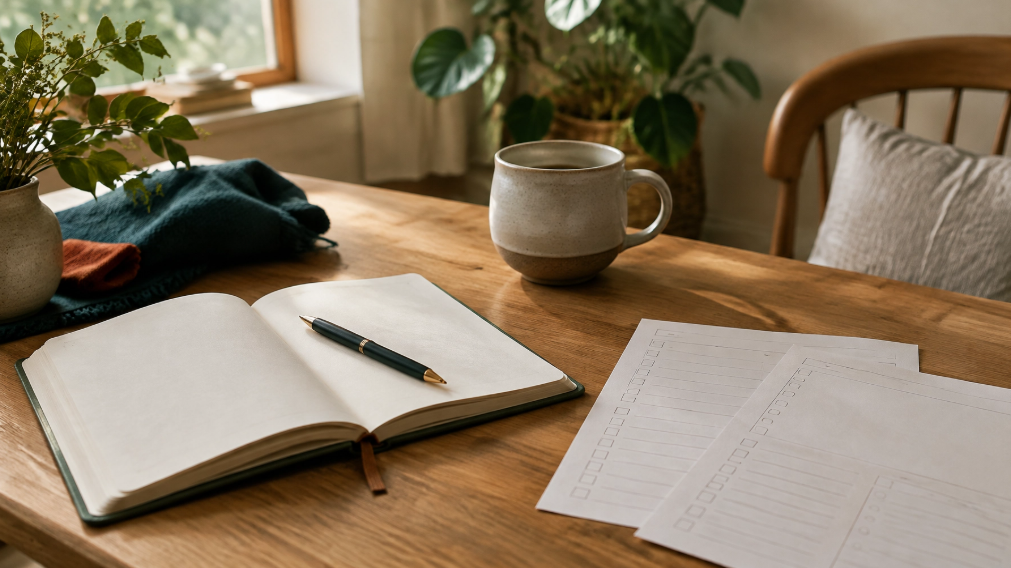
A Peaceful Scene Showcasing a Warm Cup of Tea, a Journal, and Mindfulness Worksheets
Sawubona. We see you as you navigate everything associated with life. We see the associated stress that can develop and compound, so we are here to remind you that it is okay and necessary to take a step back and be mindful. Mindfulness means paying attention to the present moment on purpose, without judging what you find. Stress relief is not the definition of mindfulness; it can be one of its fruits. You might notice a tight jaw, a noisy mind, or the warmth of a mug in your hands. No special room, long meditation, or perfect focus required.
If you’re an educator, student accessibility director, therapist, parent of a neurodivergent child, or community advocate, you may spend much of the day holding space for others. When you’re running on fumes, “just start a 45-minute morning routine” is not useful advice. A few small, realistic mindfulness tools for daily stress relief may fit better.
And if you’re reading this as the holidays stack up — ads everywhere, carts filling and emptying, calendars tightening — the timing isn’t accidental. The season rewards urgency: buy now, decide fast, don’t think. Mindfulness runs the other way. It’s the practice of taking a step back before the next decision, resetting when the noise gets loud, and refocusing on what you actually came for. The tools below work in any season, but they’re built for the loud ones.
The goal isn’t to do everything. It’s to find one practice you can return to.
It’s easy to download a worksheet, try Day 1, feel a little more present, and never open it again. That doesn’t mean you failed. Often, the plan was simply too big, too vague, or too all-or-nothing for a real day.
Make the next step smaller. Start with one minute. Skip a day if you need to. If your mind wanders, that’s not a reason to quit; noticing that it wandered is part of paying attention. A useful practice should meet your life as it is, not demand an ideal version of you.
SEVEN SMALL TOOLS TO TRY
Choose one that fits the moment. You don’t need to complete this list.
1. Try 5-4-3-2-1 sensory grounding
Pause where you are and name:
5 things you can see
4 things you can feel or touch
3 things you can hear
2 things you can smell
1 thing you can taste
Take your time noticing details: the color of a wall, the feel of your shoes, a distant sound. If a sense isn’t available or comfortable, adapt the exercise. The point is to bring your attention to what’s around you, not to get every number “right.”
2. Make the exhale a little longer
Try a few comfortable rounds of breathing in through your nose for four counts and slowly breathing out through your mouth for six. Let the breath stay gentle; don’t force a deep inhale or push past discomfort. If counting feels like one more task, simply let your exhale be a little longer than your inhale.
This extended exhale practice appears in the 3-Day Reset. You can also leave it for another day if focusing on your breath doesn’t feel right.
3. Explore 4-7-8 breathing, or adapt it
If it feels comfortable, breathe in for four counts, hold gently for seven, then breathe out for eight. Repeat for a few rounds, without straining to meet the counts. You can shorten or skip the hold or choose another tool instead. Stop and return to ordinary breathing if you feel uncomfortable.
4. Release a little muscle tension
Sit or stand comfortably. Gently tighten your jaw, shoulders, or hands for a few seconds, then let them soften. Notice the difference between holding and releasing. Keep the squeeze mild and skip any area that hurts or feels uncomfortable.
5. Do a quick brain dump
Write down what’s occupying your mind. Then make two simple groups: what I can take one step on today and what I can’t resolve today. You don’t have to solve the second group. Letting the page hold the list for a moment can make it easier to choose one next step.
6. Reframe one high-stress thought
Notice a thought that turns a difficult moment into a worst-case certainty. Write it down, then try a more neutral version based on what you know.
For example: “I’ll never get through this week” might become “This week is demanding; I can choose the next task and ask for support where I can.” You don’t have to force a positive spin. Aim for a fairer sentence.
7. Protect one screen-free hour
Choose a 60-minute block where you can step away from screens. Spend it resting, walking, making food, sitting quietly, or doing something you enjoy. If an hour isn’t realistic, begin with ten minutes. The practice is a boundary you can shape around your circumstances, not another standard to fall short of.
RESET.
REFOCUS.
RE-ENGAGE.
TWO MINDFULNESS WORKSHEETS, TWO WAYS TO BEGIN
When a list of tools feels like too many choices, a guided page can help you get started. These mindfulness worksheets turn small practices into a sequence, so you don’t have to design a routine from scratch.
Start small: Micro Mindfulness 3-Day Reset
The Micro Mindfulness 3-Day Reset is a one-page option for a low-pressure start:
Day 1, The Anchor: Try 5-4-3-2-1 grounding, then check in with places you may be holding tension, such as your jaw, shoulders, or hands.
Day 2, The Shift: Try three minutes of breathing in for four counts and out for six. Notice what you’re ready to set down with each exhale.
Day 3, The Anointing: Say no to one non-essential demand, distraction, or habit that’s taking more from you than you want to give.
Three days is the structure, not a deadline. Repeat a day, pause, or come back later.
Go deeper: Daily Stress Relief 7-Day Guide
If a full week of prompts sounds supportive, try the Daily Stress Relief 7-Day Guide. It moves through a brain dump, gentle muscle release, a breathing pause, a thought reframe, sensory grounding, a screen-free hour, and a final day of integration.
Choose the 3-Day Reset if you want a smaller commitment or a quick way to sample practices. Choose the 7-Day Guide if having a different prompt each day would help you explore a wider range. You can also use your own notebook. No purchase, perfect streak, or special setup is required.
MAKE DAY 7 YOUR KEEPING POINT. The final prompt asks you to choose one tool that worked best and commit to using it at least three times a week. That question matters because a practice you can repeat is more useful than seven practices you tried once. Pick one. Make it small. Put it where your real week can hold it.
HONOR YOUR MIND, BODY, AND SOUL.
PRACTICE PROTECTING YOUR PEACE.
GIVE YOURSELF PERMISSION TO TAKE A STEP BACK.
A WEARABLE CUE, NOT ANOTHER REQUIREMENT
Sometimes, a reminder on your body can help you remember the intention you chose. A tee can be a cue to pause, take a breath, or check in with yourself, not a guarantee that you’ll feel a certain way.
The My Peace Is Non-Negotiable tee carries its message in bold text, with a QR code on the sleeve for a quiet digital connection. Scan it when you want to explore; leave it alone when you don’t. The meaning stays yours.
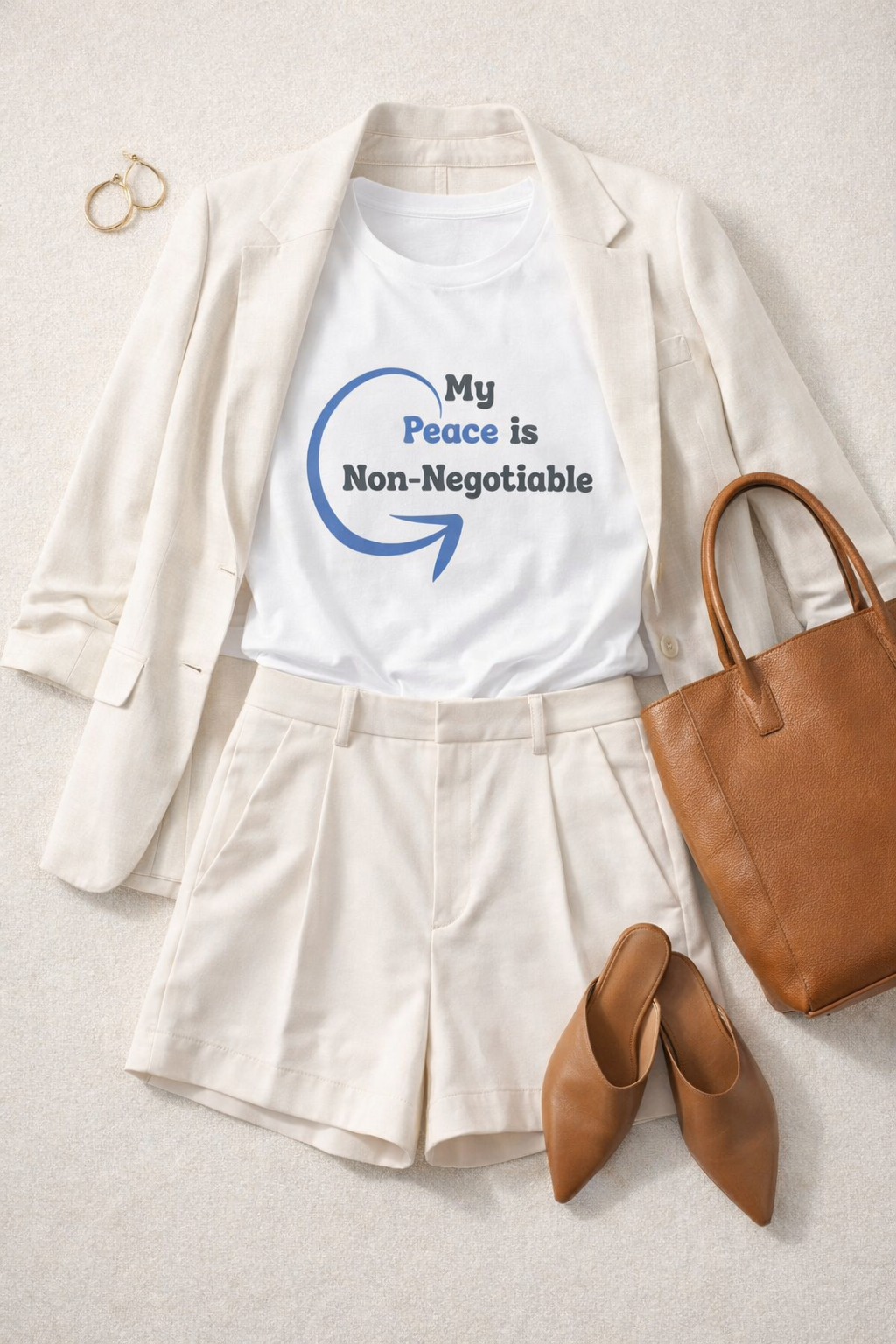
My Peace White Ladies Graphic Tee - Affirmation Apparel by Sawubona Life
The Powerful Elephant 2.0 tee brings an intricate elephant graphic and relaxed streetwear feel.
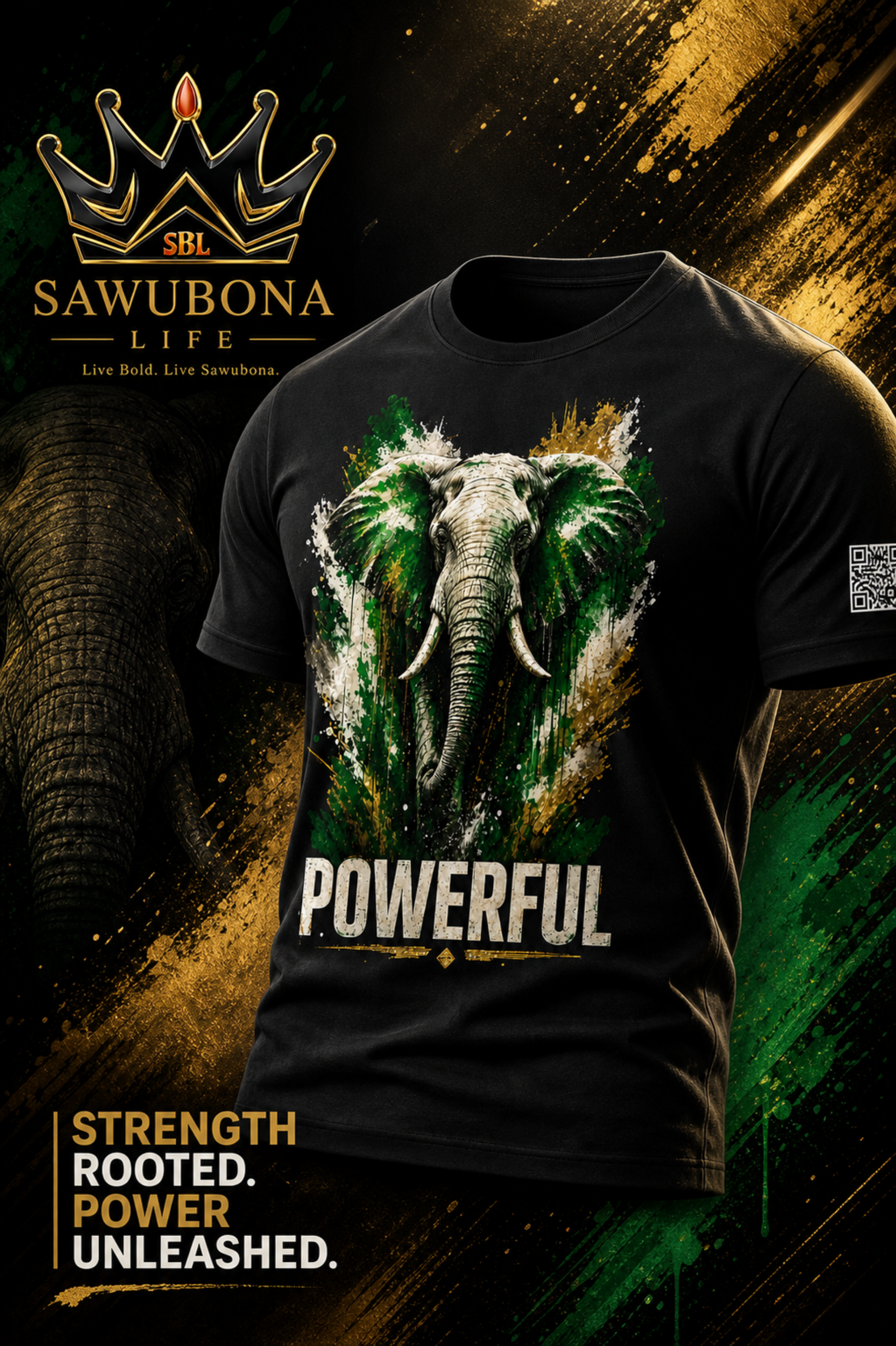
Powerful Elephant 2.0 Unisex Graphic Tee - Affirmation Apparel by Sawubona Life
The Celebrated tee pairs its crown detail with the reminder: “I Should Be Celebrated, Not Tolerated.”

Celebrated Unisex Graphic Tee - Affirmation Apparel by Sawubona Life
These are options, not assignments. Your favorite shirt, a thrifted find, or a note in your pocket can offer the same kind of reminder. Affirmation apparel and self-love clothing can be one wearable layer of a practice you’re already building. If you’re exploring Black-owned streetwear brands or graphic tees for yourself or someone else, choose what feels like you and what fits your life.
These stress relief tools are for everyday support; they are not a substitute for therapy, medication, rest, community, or professional care. You deserve support beyond a worksheet, too.
And when the season gets loud, the pause is still yours. Take one breath before you add to a cart. View one product before the next obligation. Have one honest check-in before you say yes to something you can’t hold. That’s not opting out of the holidays; it’s moving through them with intention — seeing yourself clearly enough to choose what deserves your energy.
Begin with what’s possible today: one breath, one product, one honest pause. Return when you can. Skip what doesn’t serve you. The point is not perfect consistency. It’s making a little room for yourself in the life you’re already living.
YOUR PRACTICE.
YOUR PACE.
YOUR CHOICE.